Can You Pyrex In The Oven A Complete Guide To Safe Cooking
Yes, you can use Pyrex in the oven, but only if you follow a few simple rules. Pyrex is oven safe glassware designed for baking, roasting, and reheating. The key is to avoid sudden temperature changes and stay within the recommended Pyrex temperature limit. This guide covers everything you need to know about Pyrex safety in the oven.
Can you put Pyrex in the oven? The short answer is yes. But the full answer comes with a few important rules you should know. Pyrex is one of the most popular kitchen tools in the world. People love it for baking casseroles, roasting vegetables, and making desserts. It is durable, versatile, and affordable.
But here is the thing. Pyrex safety depends on how you use it. A lot of people have heard horror stories about Pyrex exploding in the oven. And while those stories are rare, they do happen. The good news is that you can easily avoid them. You just need to understand how oven safe glass works.
In this guide, we will walk you through everything you need to know. From temperature limits to care tips, you will learn how to use your Pyrex dishes safely every single time. Whether you are a beginner cook or a seasoned baker, this article has something for you.
Key Takeaways
- Pyrex is oven safe: Modern Pyrex cookware can handle up to 450°F when used correctly.
- Avoid thermal shock: Never move Pyrex from the freezer to a hot oven or place cold Pyrex on a hot surface.
- Know your Pyrex temperature limit: Staying under 425°F to 450°F keeps your glass bakeware safe and intact.
- Inspect before each use: Check for chips, cracks, or scratches that could cause breakage during baking.
- Use the right bakeware: Not all Pyrex products are the same. Know the difference between vintage and modern Pyrex.
- Follow basic care tips: Proper cleaning and storage extend the life of your oven safe glass dishes.
📑 Table of Contents
- Can You Put Pyrex In The Oven?
- Pyrex Temperature Limits You Need To Know
- How To Use Pyrex Safely In The Oven
- Common Mistakes When Using Pyrex In The Oven
- Pyrex Care Tips To Make It Last
- Can You Use Pyrex For Other Cooking Methods?
- Pyrex vs Other Glass Bakeware Options
- Quick Tips For Safe Pyrex Cooking
- Final Thoughts
Can You Put Pyrex In The Oven?
The simple answer is yes. Pyrex is designed to go in the oven. It is made from tempered glass, which means it is treated to handle high heat. This makes it perfect for baking with Pyrex dishes. You can use it for casseroles, lasagnas, roasted meats, and even baked desserts.
But there is a catch. Not all Pyrex products are the same. And not every use is safe. The key is understanding what makes Pyrex cookware different from regular glass and how to treat it right.
What Is Pyrex Made Of?
Modern Pyrex is made from tempered glass. This type of glass is heated and then cooled very quickly during manufacturing. That process makes it much stronger than regular glass. It can handle a lot of heat without breaking.
However, tempered glass is not indestructible. It can still break if you shock it with sudden temperature changes. That is the number one enemy of glass bakeware. Understanding this is the first step toward using Pyrex safely.
Vintage vs Modern Pyrex
Here is something many people do not know. Vintage Pyrex and modern Pyrex are not the same. Older Pyrex dishes were made from a different type of glass called borosilicate. This material was very resistant to thermal shock. Many collectors still love vintage Pyrex for its durability.
Modern Pyrex is made from soda-lime glass. It is still oven safe, but it is not as resistant to sudden temperature changes. So if you have an old Pyrex dish passed down from a family member, it might actually be more forgiving than a newer one. But either way, you should still follow the basic safety rules.
Pyrex Temperature Limits You Need To Know
Every piece of Pyrex bakeware has a temperature limit. And knowing that limit is critical. The most common question we get is, “What is the Pyrex temperature limit?” The answer depends on the product.
Most modern Pyrex dishes are safe up to 425°F to 450°F. Some older or special-purpose pieces may have different limits. Always check the bottom of the dish or the packaging for the exact rating. If you cannot find it, assume 425°F as a safe maximum.
Why Temperature Matters So Much
Glass heats up differently than metal. It heats more slowly and more evenly. This is actually a great thing for baking. Your food cooks more uniformly in glass bakeware than in thin metal pans.
But glass also holds heat longer. That means your Pyrex dish will stay hot for a while after you take it out of the oven. This is great for serving. But it also means you need to be careful about where you place it. Never set hot Pyrex on a cold or wet surface.
The Danger Zone: What Happens When You Exceed The Limit
What happens if you go over the Pyrex oven temperature? The glass can crack or shatter. Sometimes it breaks immediately. Other times, the damage builds up over many uses. Each time you exceed the safe limit, you weaken the structure of the glass.
So even if your dish looks fine after one time, repeated overheating can cause it to fail later. This is why it is so important to respect the temperature ratings. It is not worth the risk, especially when you have food inside the dish.
How To Use Pyrex Safely In The Oven
Using Pyrex in the oven is easy once you know the basics. The goal is simple: keep the glass at a steady, safe temperature. Here are the steps to follow every time you bake with Pyrex.
Step 1: Preheat The Oven First
Always preheat your oven before placing Pyrex inside. Do not put a cold Pyrex dish into a cold oven and then turn on the heat. This creates uneven heating, which can cause stress on the glass. Let the oven reach the right temperature first.
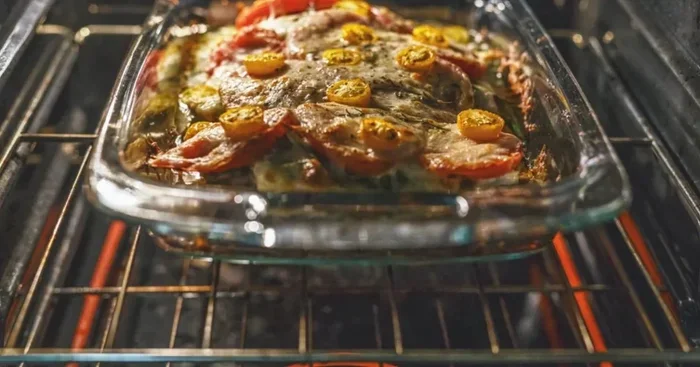
Once the oven is ready, place your Pyrex baking dish on a center oven rack. Avoid the top or bottom racks, where the heat is more intense. A center position allows for even airflow around the dish.
Step 2: Never Exceed The Temperature Limit
Stick to the recommended Pyrex temperature limit. For most dishes, that is 425°F. If your recipe calls for 450°F or higher, consider using a metal pan instead. There is no shame in switching pans. The goal is to keep your food and your bakeware safe.
If you are unsure about the temperature, use an oven thermometer. Many ovens run hotter or cooler than what the dial says. Knowing the real temperature inside your oven helps you make better decisions about which bakeware to use.
Step 3: Avoid Direct Heat Sources
Pyrex is not designed for direct flame or broiler heat. Never place it on a stovetop burner or under a broiler. The Pyrex stovetop is not safe. The concentrated heat from a flame can cause the glass to crack or shatter instantly.
Also, avoid placing Pyrex on a hot stone surface or a heated grill. These surfaces create hot spots that can damage the glass. Always use a cool, dry, and flat surface for your Pyrex dishes.
Step 4: Let It Cool Naturally
When you are done baking, let your Pyrex cool down gradually. Do not run it under cold water or place it on a cold countertop. The sudden temperature drop causes thermal shock, which is the most common reason Pyrex breaks.
Instead, place the dish on a dry oven mitt or a wooden board. Let it come to room temperature on its own. This might take 30 minutes or more, but it is worth the wait. Patience protects your Pyrex durability.
Common Mistakes When Using Pyrex In The Oven
Even experienced cooks make mistakes with Pyrex. The good news is that most of these errors are easy to avoid. Here are the most common ones we see.
Moving Pyrex From The Freezer To The Oven
This is the most dangerous thing you can do with Pyrex freezer to oven transitions. The extreme temperature difference causes the glass to crack almost instantly. If you need to go from freezer to oven, let the dish thaw at room temperature first.
Some modern Pyrex products claim to be freezer safe. That does not mean they are safe to go directly from the freezer to a hot oven. Always let the dish warm up before baking.
Using Pyrex On The Stovetop
Pyrex is not a stovetop pan. Do not try to simmer a sauce or boil water in a Pyrex dish on the stove. The direct heat from the burner creates uneven temperature distribution, which leads to cracking. If you need to heat something on the stovetop, use a pot or pan made for that purpose.
Ignoring Small Cracks Or Chips
Do you have a Pyrex dish with a small chip on the rim? It might look fine, but it is a weak spot. Over time, that chip can grow, especially when exposed to heat. If your Pyrex dishes have any visible damage, it is best to retire them. No recipe is worth the risk of a broken dish in your oven.
Overfilling The Dish
When baking with Pyrex, leave some room at the top. Overfilling can cause the contents to bubble over and stick to the sides. The extra weight and moisture can also put stress on the glass. A good rule of thumb is to fill the dish no more than two-thirds full.
Using Damaged Lids
Many Pyrex dishes come with lids. But not all lids are oven safe. The Pyrex lid oven safe rating is often different from the dish itself. Most plastic lids should never go in the oven. Even silicone lids have temperature limits. Always check the lid separately before putting it in the heat.
Pyrex Care Tips To Make It Last
Your Pyrex cookware can last for years if you take care of it. Proper maintenance keeps it safe and looking good. Here are some simple Pyrex care tips everyone should follow.
- Wash by hand when possible. Dishwashers can be harsh on glass over time. Hand washing with warm soapy water is gentler.
- Use non-abrasive sponges. Avoid steel wool or harsh scrubbers. They can scratch the surface and create weak points.
- Store carefully. Do not stack heavy items on top of your Pyrex dishes. Place a cloth or paper towel between stacked pieces to prevent scratches.
- Check for damage before each use. A quick visual inspection takes only a few seconds. Look for cracks, chips, or cloudiness.
- Avoid sudden temperature changes. This cannot be stressed enough. Let Pyrex adjust to room temperature before exposing it to heat or cold.
Can You Use Pyrex For Other Cooking Methods?
Pyrex is not just for the oven. It is a versatile piece of kitchenware that works in several cooking situations. Here is a quick look at what else you can do with it.
Pyrex In The Microwave
Yes, you can use Pyrex in the microwave. It is one of the safest materials for microwave cooking. The glass heats evenly and does not absorb microwave energy the way some plastics do. Just make sure the lid is microwave safe before covering your dish.
Pyrex In The Dishwasher
Most Pyrex dishes are dishwasher safe. The high water temperature and detergent will not harm the glass. However, if you want to extend the life of your dishes, hand washing is always the gentler option.
Pyrex In The Freezer
You can store food in Pyrex in the freezer. The glass handles cold temperatures well. Just remember the golden rule: never go from the freezer directly to a hot oven. Always let the dish adjust to room temperature first.
Pyrex vs Other Glass Bakeware Options
Pyrex is not the only oven safe glassware on the market. Let us compare it to a few other popular options.
| Feature | Pyrex | Anchor Hocking | Ceramic Bakeware |
|---|---|---|---|
| Max Oven Temp | 425°F to 450°F | 425°F to 450°F | Varies (usually 450°F+) |
| Thermal Shock Resistance | Moderate | Moderate | High |
| Stovetop Safe | No | No | Some yes |
| Microwave Safe | Yes | Yes | Yes |
| Durability | High | High | Very High |
| Price Range | Budget to Mid | Budget | Mid to High |
Each type of glass bakeware has its strengths. Pyrex is a great all-around choice for most home cooks. Ceramic is excellent for slow cooking and presentation. The best choice depends on your cooking style and needs.
Quick Tips For Safe Pyrex Cooking
Here is a quick list of Pyrex safety tips to keep in mind every time you cook:
- Always preheat the oven before placing Pyrex inside.
- Never exceed the recommended temperature on the dish.
- Place Pyrex on a dry, flat surface before and after baking.
- Let the dish cool to room temperature before washing.
- Inspect for chips or cracks before every use.
- Never use Pyrex on the stovetop or under a broiler.
- Use oven mitts when handling hot Pyrex dishes.
- Do not overfill the dish with food or liquid.
These tips take only a few seconds to follow. But they can make a huge difference in how long your Pyrex lasts and how safe your cooking experience is.
Final Thoughts
So, can you Pyrex in the oven? Absolutely. Pyrex is a trusted and reliable choice for home cooking. It is oven safe, microwave safe, and freezer safe when used correctly. The key is respecting the Pyrex temperature limit and avoiding sudden temperature changes.
By following the tips in this guide, you can enjoy baking with Pyrex for years to come. Your dishes will stay safe, your food will cook evenly, and you will have one less thing to worry about in the kitchen. Treat your Pyrex well, and it will treat you right.
Remember, oven safe glassware like Pyrex is a kitchen workhorse. Use it wisely, care for it properly, and it will serve you well through countless meals and memories.
Frequently Asked Questions
Can Pyrex go from the freezer to the oven?
No, you should never move Pyrex directly from the freezer to a hot oven. The sudden temperature change causes thermal shock, which can crack or shatter the glass. Let the dish thaw at room temperature first, then place it in a preheated oven.
What temperature is Pyrex safe up to?
Most modern Pyrex dishes are safe up to 425°F to 450°F. Always check the bottom of the dish or the packaging for the exact rating. If you cannot find it, do not exceed 425°F to be safe.
Can Pyrex explode in the oven?
Pyrex can break or shatter if it experiences thermal shock. This happens when you expose cold Pyrex to high heat or vice versa. As long as you preheat the oven, avoid temperature extremes, and follow the care guidelines, the risk of explosion is very low.
Is vintage Pyrex oven safe?
Yes, vintage Pyrex is generally oven safe. In fact, older Pyrex made from borosilicate glass was often more resistant to thermal shock than modern versions. However, you should still inspect vintage pieces for damage before using them in the oven.
Can you put a Pyrex lid in the oven?
It depends on the lid material. Most Pyrex plastic lids are not oven safe and should only be used for storage. Some silicone lids can handle moderate heat, but you should always check the manufacturer’s instructions before placing any lid in the oven.
Can Pyrex go on the stovetop?
No, Pyrex is not designed for stovetop use. The direct heat from a burner can cause the glass to crack or shatter. Pyrex should only be used in the oven, microwave, dishwasher, and freezer. For stovetop cooking, use pots and pans made for that purpose.
=== CONCLUSION ===
Can you Pyrex in the oven? Yes, you can, and now you know exactly how to do it safely. The key takeaways are simple. Respect the temperature limit, avoid sudden changes, and care for your dishes properly. Pyrex safety is easy when you follow a few basic rules.
Whether you are roasting a Sunday dinner or baking a weekend dessert, Pyrex cookware makes the job easier and more enjoyable. Use the tips from this guide, share them with your friends, and keep your kitchen running smoothly. Happy baking!