Can You Put A Cookie Rack In The Oven And Use It Safely
Yes, you can put a cookie rack in the oven, but only if it is oven-safe. Using a wire cooling rack inside your oven can help cookies bake evenly on all sides. This guide covers safe temperatures, rack placement, and tips for getting the best results every time you bake.
You are standing in your kitchen, ready to bake a fresh batch of cookies. You pull out your cooling rack, set it on the baking sheet, and then a thought hits you. Can you put a cookie rack in the oven? It seems like a simple question, but the answer is not as straightforward as you might think.
The truth is, many home bakers use cooling racks in ways they never expected. Some people place them directly on oven racks to achieve crispy bottoms. Others use them as makeshift baking surfaces. But doing this the wrong way can lead to uneven baking, melted racks, or even safety hazards. That is why understanding how to use a cookie rack in the oven properly matters so much.
In this guide, we will walk through everything you need to know. From material safety to oven placement, we have you covered. You will learn exactly when it is safe, what to avoid, and how to get the best results from your baking rack in oven setup.
Key Takeaways
- Not all racks are oven-safe: Check the material and manufacturer guidelines before placing a cooling rack in a hot oven.
- Stainless steel racks work best: They handle high heat without warping or releasing harmful chemicals.
- Placement matters: The middle oven rack provides the most even heat distribution for cookies.
- Watch your temperature: Most oven-safe racks handle up to 400-450°F, but always double-check.
- Avoid coated or plastic racks: These can melt, release fumes, or damage your baked goods.
- Use parchment paper: It prevents cookies from sticking and makes cleanup a breeze.
📑 Table of Contents
- What Is a Cookie Rack and How Does It Work?
- Can You Put a Cookie Rack in the Oven Safely?
- Best Types of Racks for Oven Use
- How to Use a Cookie Rack in the Oven Properly
- Benefits of Baking on a Cookie Rack
- Common Mistakes to Avoid
- Expert Tips for Oven Rack Baking
- Can You Use Other Types of Racks in the Oven?
- Quick Tips for Safe Oven Rack Use
- Frequently Asked Questions
- Conclusion
What Is a Cookie Rack and How Does It Work?
A cookie rack is a lightweight frame made of wire or metal. It is designed to let air flow around cookies as they cool. The open structure means hot air escapes from all sides. This prevents soggy bottoms and helps cookies stay crisp.
Most cookie racks are made from stainless steel or chrome-plated steel. Some are coated with nonstick material. Others are made from silicone with a metal frame. Each type behaves differently when exposed to heat. That is the key factor in deciding whether you can use one in the oven.
The Purpose of a Cooling Rack
The main job of a cooling rack is airflow. When cookies come out of the oven, they release steam from the bottom. If they sit flat on a surface, that steam gets trapped. The result is a soft, sometimes soggy bottom. A rack lifts the cookies off the surface. Air circulates freely underneath. The bottoms stay crisp and the cookies cool evenly.
But here is where things get interesting. Some bakers realized that placing a rack inside the oven during baking offers similar benefits. Instead of baking cookies directly on a sheet pan, they put the rack on the pan and bake on that. The result? Cookies that bake evenly on top and bottom. This technique has become popular for good reason.
Can You Put a Cookie Rack in the Oven Safely?
The short answer is yes. The longer answer depends on a few important factors. Not every cookie rack is built to handle oven heat. Using the wrong type can be dangerous. It can also ruin your cookies.
When It Is Safe
A cookie rack in oven use is safe when the rack is made from heat-resistant materials. Stainless steel racks are the safest option. They can handle temperatures up to 500°F or higher without warping. Chrome-plated steel racks also work well at moderate temperatures, usually up to 450°F.
You also need to check the manufacturer’s label. Many racks come with guidelines printed on the packaging or the product itself. Look for words like “oven safe” or “heat resistant.” If the rack has any rubber or silicone parts, check their heat tolerance. Some silicones handle up to 450°F, while others soften at much lower temperatures.
When It Is Not Safe
Never put a rack with plastic handles in the oven. The plastic will melt. It can release toxic fumes. It will also ruin your rack and potentially damage your oven. Similarly, avoid racks with wooden components. Wood will burn at oven temperatures.
Nonstick-coated racks are another concern. Some nonstick coatings can release harmful chemicals when overheated. Most nonstick surfaces are safe up to about 450°F, but some lower-quality coatings degrade faster. If your rack has a nonstick coating, keep your oven temperature below 400°F to be safe.
Thin wire racks are also risky. They can warp under high heat. A warped rack will sit unevenly on your baking sheet. This leads to cookies that bake unevenly. In the worst case, a warped rack can slip through the oven grates and cause damage or injury.
Best Types of Racks for Oven Use
Not all racks are created equal. If you plan to use a baking rack in oven regularly, choosing the right type makes a big difference. Here are the best options.
Stainless Steel Cooling Racks
Stainless steel is the gold standard for oven-safe racks. It is durable, heat-resistant, and does not release harmful chemicals. A good stainless steel rack can last for years. It handles high temperatures without bending or warping. Look for racks with a mesh or grid pattern. These allow maximum air flow and even heat distribution.
Chrome-Plated Steel Racks
Chrome-plated racks are common in most kitchens. They are lightweight and affordable. They work well for cooling, but their oven performance depends on the thickness of the wire and the quality of the chrome coating. High-quality chrome racks handle oven temperatures fine. Cheaper versions may warp or peel over time.
Silicone-Coated Wire Racks
Some racks have a silicone coating on the wire surface. This makes them nonstick and easy to clean. The silicone can handle oven temperatures up to 450°F in most cases. However, the metal frame underneath must also be oven-safe. Always check both components before placing these racks in the oven.
Oven-Specific Baking Racks
Some manufacturers make racks specifically designed for oven use. These are often labeled as “oven racks” or “baking racks.” They are built to withstand prolonged heat exposure. They may have reinforced wire construction and heat-resistant handles. If you bake frequently, investing in one of these can be a smart move.
| Rack Type | Oven Safe? | Max Temp | Best For |
|---|---|---|---|
| Stainless Steel | Yes | 500°F+ | All oven baking |
| Chrome-Plated Steel | Yes (quality dependent) | 450°F | Moderate baking |
| Silicone-Coated Wire | Yes (check coating) | 450°F | Nonstick baking needs |
| Plastic-Handled | No | N/A | Cooling only |
| Wooden | No | N/A | Cooling only |
| Nonstick-Coated | Yes (with limits) | 400°F | Low-temp baking |
How to Use a Cookie Rack in the Oven Properly
Now that you know which racks are safe, let us talk about technique. Using a cookie rack in oven the right way can transform your baking results. It takes a little practice, but the payoff is worth it.
Step-by-Step Guide
Follow these steps for the best results:
- Check your rack material. Make sure it is stainless steel, chrome-plated steel, or oven-safe silicone.
- Preheat your oven. Set it to your recipe temperature before placing the rack inside.
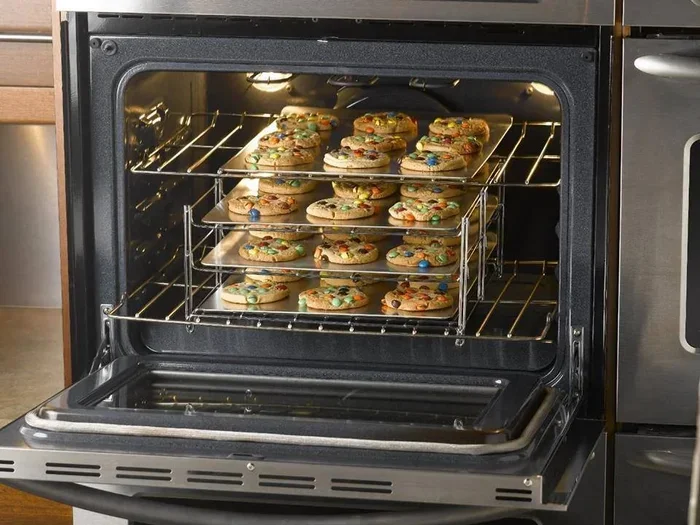
- Place the rack on a baking sheet. The baking sheet acts as a stable base. It catches any drips and prevents the rack from slipping through the oven grates.
- Position the rack in the middle of the oven. The middle rack offers the most even heat. It avoids the top and bottom elements that can cause hot spots.
- Arrange cookies on the rack. Leave space between each cookie. Air needs to flow around them for even baking.
- Bake for the recommended time. Check for doneness a few minutes early. Rack-baked cookies may brown slightly faster.
- Remove carefully. Use oven mitts. The rack and baking sheet will be hot.
Tips for Even Baking
Getting the most out of your oven rack setup takes a few extra tricks. Rotate your baking sheet halfway through the bake time. This compensates for any hot spots in your oven. If you are baking multiple sheets, stagger them on different racks. This improves air circulation.
Using parchment paper on the rack also helps. It prevents cookies from sticking and makes cleanup easier. Some bakers even place a second rack underneath the baking sheet for extra airflow. This double-rack method works well for larger batches.
Benefits of Baking on a Cookie Rack
Why go through the trouble of using a rack inside the oven? The benefits are real and noticeable. Many experienced bakers swear by this technique.
- Even browning on all sides. Heat reaches the bottom of the cookie just as much as the top. No more pale tops with dark bottoms.
- Crispier texture throughout. Air flow removes moisture evenly. The result is a consistent crunch or chew, depending on your recipe.
- Faster baking times. Hot air circulates more efficiently around the cookies. They may bake a minute or two faster than on a flat sheet.
- No sticking. Cookies do not fuse to the rack surface. They lift off easily once cooled.
- Better batch consistency. Every cookie in the batch bakes at the same rate. You get uniform size, color, and texture.
Common Mistakes to Avoid
Even with the right rack, mistakes can happen. Here are the most common ones and how to avoid them.
Using a Rack Without a Baking Sheet
Never place a bare cooling rack directly on the oven grate. Cookies will fall through the gaps. The rack can also shift during baking. Always set the rack on a sturdy baking sheet first. The sheet provides a stable, flat surface for your cookies.
Overcrowding the Rack
It is tempting to fit as many cookies as possible on the rack. Resist this urge. Overcrowding blocks air flow. Cookies will steam instead of bake. They will come out soft and uneven. Leave at least one inch of space between each cookie.
Ignoring Temperature Limits
Every rack has a heat limit. Exceeding it can warp the wire or damage the coating. Check the manufacturer’s guidelines. When in doubt, keep your oven below 400°F for safety.
Skipping the Parchment Paper
Parchment paper is your best friend when baking on a rack. Without it, cookies may stick to the wire grid. The result is misshapen cookies and frustration. A quick lay of parchment paper solves this problem entirely.
Expert Tips for Oven Rack Baking
We spoke with experienced bakers and gathered their top tips for using a wire cooling rack in oven setups. These small adjustments can make a big difference.
Tip 1: Chill your dough first. Cold dough holds its shape better on a rack. It is less likely to spread and merge with neighboring cookies. Refrigerate your dough for at least 30 minutes before baking.
Tip 2: Use a light-colored baking sheet. Dark sheets absorb more heat. They can cause the bottoms of your cookies to overbake. A light-colored or aluminum sheet reflects heat more evenly.
Tip 3: Line the rack with parchment. This simple step prevents sticking and makes cleanup effortless. You can also use a silicone baking mat on the rack for the same effect.
Tip 4: Let the rack cool before storing. Residual heat can warp thin racks if they are stored while still warm. Allow them to cool completely before putting them away.
Tip 5: Test with one cookie first. If you are trying this method for the first time, bake a single cookie. Check the result before committing to a full batch. This lets you adjust time and temperature as needed.
Can You Use Other Types of Racks in the Oven?
Cookie racks are not the only racks people wonder about. Here are a few related questions that come up often.
Cooling Racks vs. Oven Racks
Your oven comes with built-in racks. These are designed for direct oven use. A cooling rack is a separate accessory meant for counter use. While some cooling racks can go in the oven, they are not the same as the oven’s built-in racks. The built-in racks hold your baking sheets and cookware. Cooling racks are lighter and more flexible. They serve a different purpose but can overlap in function when used correctly.
Wire Cooling Racks in Convection Ovens
Convection ovens have a fan that circulates hot air. This makes them ideal for rack baking. The fan ensures even heat distribution around the rack and cookies. If you have a convection oven, you will get excellent results with a cookie rack in oven setup. Just remember to lower the temperature by about 25°F. Convection ovens run hotter than conventional ones.
Toaster Oven Compatibility
Can you use a cookie rack in a toaster oven? It depends on the size. Most toaster ovens are too small to fit a standard cooling rack. If your toaster oven is large enough, check that the rack fits securely. Also, toaster ovens heat unevenly, so rotation becomes even more important. Keep a close eye on your cookies when using a rack in a toaster oven.
Quick Tips for Safe Oven Rack Use
- Always check the rack material before oven use.
- Use a baking sheet as a base for stability.
- Place the rack in the middle oven position.
- Do not exceed 400°F if unsure about heat limits.
- Leave space between cookies for air flow.
- Use parchment paper or a silicone mat to prevent sticking.
- Rotate the baking sheet halfway through baking.
- Remove the rack with oven mitts to avoid burns.
Frequently Asked Questions
Can I put a wire cooling rack directly on the oven grate?
It is not recommended. Cookies can fall through the grate openings, and the rack may shift during baking. Always place the cooling rack on top of a baking sheet first. The sheet provides a stable base and catches any drips. This also prevents accidents and ensures even baking.
What temperature can a cookie rack withstand in the oven?
Most stainless steel cookie racks handle temperatures up to 500°F. Chrome-plated racks are usually safe up to 450°F. Nonstick-coated racks should stay below 400°F to protect the coating. Always check the manufacturer’s guidelines for your specific rack model. When in doubt, keep your oven temperature moderate.
Is it safe to bake cookies directly on a wire rack in the oven?
Yes, it is safe as long as the rack sits on a baking sheet. The baking sheet supports the rack and holds the cookies in place. Baking directly on the oven grate without a sheet is not safe. Cookies will fall through, and the rack may become unstable. Always use a sheet as a base for safe and successful rack baking.
Can I use a silicone cooling rack in the oven?
Many silicone cooling racks are oven-safe up to 450°F. However, you need to verify the silicone quality and the metal frame underneath. Low-quality silicone may release fumes or degrade at high temperatures. Check for oven-safe labels and manufacturer guidelines. High-quality silicone racks with stainless steel frames work great in the oven.
Why are my cookies burning on the bottom when baked on a rack?
This usually happens because the rack is too close to the bottom heating element. Move the rack to the middle position of the oven. You can also place a second baking sheet underneath the rack to create a heat buffer. Dark-colored baking sheets absorb more heat and can contribute to overbaking. Switch to a light-colored sheet if this keeps happening.
Can I use a cookie rack in a toaster oven?
Only if the rack fits comfortably inside the toaster oven. Most toaster ovens are too small for standard cooling racks. If your toaster oven has enough space, place the rack on a smaller baking sheet. Keep a close eye on your baking since toaster ovens can have hot spots. Rotate the sheet halfway through for even results.
Conclusion
The answer to the question can you put a cookie rack in the oven is a clear yes. With the right rack and the right technique, you can achieve beautifully baked cookies with even browning and perfect texture. The key is knowing which racks are safe, how to position them, and what mistakes to avoid.
Stainless steel racks are your best bet. They are durable, heat-resistant, and safe for oven use at high temperatures. Always use a baking sheet underneath for stability. Place the rack in the middle of the oven for the most even heat. And never forget to leave space between your cookies for proper air flow.
Using a cookie rack in oven setups is a game-changer for home bakers. It takes your cookies from good to great. The extra effort is minimal, but the results speak for themselves. Crispy bottoms, even browning, and consistent batches every single time.
Now that you know how to use a cooling rack in the oven safely, it is time to put this knowledge to work. Pull out your rack, preheat the oven, and bake your next batch with confidence. Your cookies will thank you for it.