How Long To Cook Asparagus In Oven And Get Perfect Results
How long to cook asparagus in oven depends on the thickness of your spears and the temperature you choose. Most asparagus roasts perfectly in 12 to 20 minutes at 400°F, giving you tender, slightly crispy results every time. Whether you prefer thin spears or thick stalks, this guide covers everything you need to know about oven-baked asparagus like a pro.
There is something magical about how long to cook asparagus in oven and the transformation that happens in those few minutes. What starts as a bunch of green stalks on your counter turns into a crispy, flavorful side dish that pairs with almost everything. Whether you are a beginner in the kitchen or a seasoned home cook, mastering the art of roast asparagus is one of the simplest skills you can build.
Many people overcook their asparagus. The result is mushy, bland, and sadly wasted. But with the right oven temperature and timing, you get tender yet slightly crisp spears that taste incredible. This guide walks you through every step, from choosing the right stalks at the store to pulling them out of the oven at the perfect moment.
By the end of this article, you will know the exact asparagus cooking time for every spear size, the best seasonings, and the common mistakes that ruin a good batch. Let us get into it.
Key Takeaways
- 400°F is the ideal temperature: This heat level creates a perfect balance of tender interiors and lightly charred exteriors.
- Thin spears take 10-12 minutes: Delicate asparagus needs less time, so watch it closely to avoid burning.
- Thick spears need 15-20 minutes: Larger stalks require more oven time to cook through evenly.
- Dry the asparagus before seasoning: Moisture is the enemy of crispy roasted asparagus.
- Don’t skip the snap test: This simple check tells you exactly when your asparagus is done.
- Season after oiling: Salt draws out moisture, so always coat with oil first for best flavor.
- Let it rest briefly: A short rest after baking helps the flavors settle and the texture firm up.
📑 Table of Contents
- Understanding Your Asparagus Before Cooking
- The Best Oven Temperature for Asparagus
- How Long To Cook Asparagus In Oven — Step by Step
- Seasoning and Flavor Ideas for Roasted Asparagus
- How to Tell When Asparagus Is Done
- Common Mistakes to Avoid
- Serving Suggestions and Pairings
- Storing and Reheating Leftover Asparagus
- Conclusion
Understanding Your Asparagus Before Cooking
Not all asparagus is the same. Before you even think about baking asparagus, you need to understand what you are working with. The thickness of the spears, their freshness, and how you prep them all change the final result dramatically.
Choosing the Right Spears
When you pick up a bunch of asparagus spears, look for firm, bright green stalks with tight, closed tips. The tips should look compact and not wilted. If the bottoms are dry or woody, that is a sign the asparagus has been sitting too long.
Fresh roasted asparagus starts with fresh produce. Here are a few quick tips for selecting the best bunch:
- Check the color: Go for vibrant green or deep purple varieties. Avoid any that look yellow or brown.
- Feel the stalks: They should snap slightly when you bend them. If they bend without breaking, they are too old.
- Look at the bottoms: The cut ends should be moist, not dried out or slimy.
- Size consistency: Try to buy bunches where the spears are similar in thickness. This makes cooking more even.
Why Thickness Changes Everything
This is the single most important factor in determining how long to cook asparagus in oven. Thin spears and thick spears behave very differently under heat.
Thin asparagus (about the width of a pencil) cooks fast. It can go from perfectly done to overcooked in just a couple of minutes. Thick asparagus (wider than your pinky finger) needs more time because the center takes longer to heat through. Medium spears fall somewhere in between.
When you understand this, you stop guessing. You start cooking with confidence. And that is exactly what this guide helps you do.
The Best Oven Temperature for Asparagus
The oven temperature you choose has a huge impact on the texture and flavor of your oven roasted asparagus. Too low, and the spears steam instead of roast. Too high, and the tips burn before the bottoms are cooked.
Why 400°F Is the Sweet Spot
Most asparagus recipes call for 400°F. Here is why that number works so well:
- At 400°F, the surface of the asparagus caramelizes quickly, creating those delicious slightly crispy edges.
- The heat penetrates the thick center without drying out the whole spear.
- You get a golden brown exterior with a tender, juicy interior in a reasonable timeframe.
- Vegetables roasted at this temperature develop deeper, more complex flavors through the Maillard reaction.
Some people prefer 425°F for a faster, crispier result. Others go as low as 375°F for a gentler roast. But for most home cooks, 400°F is the go-to asparagus temperature that delivers consistent, excellent results.
Adjusting Temperature for Different Spear Sizes
If you are working with very thin spears, you can drop the temperature to 375°F. This gives them a slower, more gentle roast and reduces the risk of burning the tips. For extra-thick stalks, 425°F works well because the higher heat helps the dense center cook faster.
The key takeaway is this: how long to cook asparagus in oven and the temperature are connected. Change one, and you need to adjust the other.
How Long To Cook Asparagus In Oven — Step by Step
Now let us get into the practical details. This is where you learn the exact process for baking asparagus that comes out perfect every single time.
Preparing the Asparagus
Preparation is where most people go wrong. They skip steps that make a big difference in the final result. Here is what you should do:
- Rinse the spears: Hold them under cool running water. Gently shake off any dirt.
- Dry them thoroughly: Use a clean kitchen towel or paper towels. Pat them dry. Moisture on the surface leads to steaming, not roasting.
- Snap off the woody ends: Grab each spear near the bottom and gently bend it. The natural breaking point shows you where the tough, woody part ends and the tender part begins.
- Arrange on the sheet pan: Lay the spears in a single layer. Do not crowd them. Overlapping spears will steam instead of roast.
Once your asparagus spears are prepped and on the pan, you are ready for the oven.
The Actual Baking Process
Here is the core process for how long to cook asparagus in oven at the standard 400°F temperature:
- Preheat your oven to 400°F before you start prepping the asparagus. A hot oven from the start is essential.
- Toss with olive oil: Use about one tablespoon of olive oil per pound of asparagus. Spread it evenly over the spears.
- Season with salt and pepper: A generous pinch of kosher salt and fresh black pepper brings out the natural flavor.
- Spread in a single layer on a lined baking sheet.
- Roast for 12 to 20 minutes, depending on thickness. Thin spears need 10 to 12 minutes. Medium spears need 14 to 16 minutes. Thick spears need 17 to 20 minutes.
- Flip halfway through: At the halfway mark, use tongs to turn each spear. This ensures even browning on both sides.
- Check for doneness by looking for bright color, slight charring on the tips, and a tender-but-firm texture.
For how long to cook asparagus in oven at 375°F, add about 3 to 5 minutes to each range. At 425°F, reduce by 2 to 3 minutes. These small adjustments make a big difference.
Seasoning and Flavor Ideas for Roasted Asparagus
One of the best things about oven roasted vegetables like asparagus is how versatile they are. The base method is simple, but the flavor possibilities are endless.
Simple Olive Oil and Salt
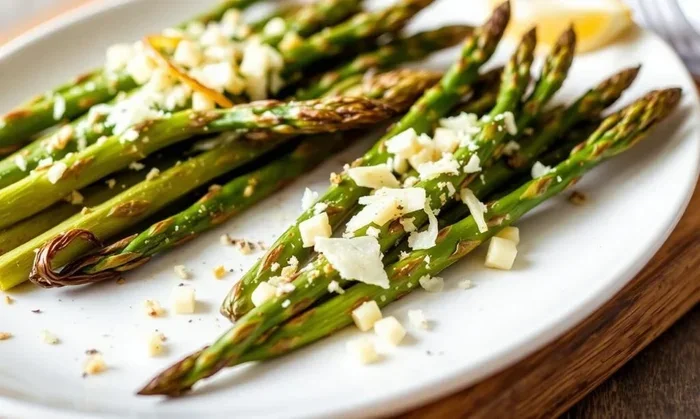
Sometimes less is more. A light coat of extra virgin olive oil, a sprinkle of flaky sea salt, and a squeeze of fresh lemon juice at the end creates a clean, bright flavor that lets the asparagus shine. This is the classic approach and it works beautifully every time.
Garlic and Herb Variations
If you want more depth, try adding minced garlic to the oil before tossing the spears. Fresh rosemary, thyme, or oregano also pair wonderfully with roasted asparagus. Here are some popular combinations:
- Garlic and Parmesan: Toss with olive oil and minced garlic, then sprinkle grated Parmesan on top during the last 5 minutes of roasting.
- Lemon and chili flakes: Add lemon zest before roasting and a pinch of red pepper flakes for a subtle kick.
- Balsamic glaze finish: After roasting, drizzle a small amount of balsamic reduction over the warm spears.
- Sesame and soy: Toss with sesame oil instead of olive oil and add a light soy sauce glaze after baking.
These asparagus recipes take minutes to prepare but feel like restaurant-quality dishes. They are perfect for weeknight dinners or weekend entertaining.
How to Tell When Asparagus Is Done
Knowing when to pull your asparagus out of the oven is just as important as the cooking time itself. Overcooked asparagus loses its vibrant color and turns limp and mushy.
Visual Cues
Look at the spears. Well-roasted asparagus should be bright green with slightly darkened, charred tips. The stalks should still look firm and hold their shape. If they are turning olive green or brown all over, they have been in the oven too long.
The Snap Test
This is the most reliable way to check asparagus doneness. Grab a spear near the middle and gently try to bend it. It should bend slightly but not snap in half. If it feels stiff and refuses to bend, it needs more time. If it folds easily, it is overcooked.
The ideal tender asparagus bends like a green bean — still with some resistance but not rigid. Practice this test a few times and you will develop an instinct for it.
Common Mistakes to Avoid
Even experienced cooks make mistakes with roast asparagus. Here are the most common errors and how to fix them:
- Overcrowding the pan: When spears overlap, they steam instead of roast. Use a large sheet pan or work in batches.
- Skipping the drying step: Wet asparagus steams and turns soggy. Always pat the spears dry after washing.
- Adding salt too early: Salt draws moisture out of the vegetables. Oil them first, then season right before they go in the oven.
- Using the wrong pan: A dark, non-stick pan absorbs more heat and can burn the bottoms. Use a light-colored baking sheet or line it with parchment paper.
- Not preheating the oven: Putting asparagus in a cold oven throws off the timing and leads to uneven cooking.
- Ignoring spear thickness: Mixing thin and thick spears on the same pan means some will be done while others are still raw. Separate them if needed.
Avoiding these mistakes alone can transform your asparagus side dish from mediocre to outstanding. Keep these tips in mind every time you roast a batch.
Serving Suggestions and Pairings
Roasted asparagus is a fantastic asparagus side dish on its own, but it also pairs beautifully with many main courses. Here are some ideas to inspire your next meal:
- With grilled chicken or salmon: The charred, savory flavors complement any grilled protein perfectly.
- In a pasta dish: Toss roasted spears with penne, olive oil, cherry tomatoes, and feta cheese.
- On a charcuterie board: Oven-baked asparagus adds a fresh, green element alongside cured meats and cheeses.
- In an omelet or frittata: Chopped roasted asparagus brings wonderful flavor and texture to breakfast eggs.
- Alongside a steak: A bundle of crispy asparagus alongside a juicy steak makes for a complete, satisfying plate.
The versatility of this vegetable is one of its greatest strengths. It works at brunch, dinner, and even as a healthy snack on its own. Once you master the basic roasting technique, you will find yourself making it weekly.
Storing and Reheating Leftover Asparagus
If you have leftover baked asparagus, you can store it in an airtight container in the refrigerator for up to three days. Reheating in the oven at 350°F for 5 to 7 minutes helps maintain the texture better than microwaving.
Avoid storing asparagus in a sealed container while still warm. Let it cool to room temperature first. This prevents condensation, which leads to sogginess. Proper storage ensures your oven roasted vegetables stay delicious even on day two.
Conclusion
Mastering how long to cook asparagus in oven is easier than most people think. With the right temperature, the right timing, and a little attention, you can pull out perfectly roasted asparagus every single time. The key is understanding your spears, prepping them properly, and watching them closely as they roast.
Remember the basics: 400°F for most spears, 12 to 20 minutes depending on thickness, and always dry your stalks before seasoning. Avoid the common mistakes, experiment with flavors, and trust the snap test to tell you when they are done.
Oven-baked asparagus is one of the simplest, healthiest, and most delicious sides you can make. It takes almost no effort and delivers impressive results every time. So the next time you are at the grocery store, grab a bunch, fire up your oven, and put this knowledge to work. Your taste buds will thank you.
Frequently Asked Questions
Can I cook asparagus at 350°F instead of 400°F?
Yes, you can, but it will take longer. At 350°F, expect the cooking time to increase by about 5 to 8 minutes. The lower temperature gives you a gentler roast, which can be nice for very thin spears that tend to burn at higher heat.
Should I wrap asparagus in foil before roasting?
No, foil traps steam and prevents the asparagus from getting crispy. For the best results, spread the spears in a single layer on an open baking sheet. This allows the hot air to circulate around each spear and creates that desirable light char.
Can I roast asparagus ahead of time?
You can roast it ahead, but it is best enjoyed fresh. If you need to prep ahead, store the roasted spears in the fridge and reheat them in the oven at 350°F for a few minutes. The texture will not be quite as crisp as when first served, but the flavor remains great.
What is the best way to store fresh asparagus before cooking?
Trim the ends and stand the spears upright in a jar or glass with about an inch of water. Cover the tops loosely with a plastic bag and store in the refrigerator. This keeps the asparagus fresh for up to four days before you cook it.
Can I use frozen asparagus for roasting?
Yes, but thaw it first and pat it completely dry. Frozen asparagus has more moisture, which can lead to steaming instead of roasting. Once thawed and dried, treat it the same way you would fresh spears and adjust the cooking time slightly downward.
Is roasted asparagus healthy?
Absolutely. Asparagus is low in calories and packed with fiber, vitamins A, C, and K, and antioxidants. Roasting with a small amount of olive oil preserves most of its nutritional value while adding a delicious flavor that makes you want to eat more vegetables.