How To Cook Filet Mignon On Stove Then Oven Like A Pro
Learning how to cook filet mignon on stove then oven is the easiest way to get restaurant-quality steak at home. This method gives you a golden crust on the outside and a perfectly pink center on the inside. You simply sear the steak in a hot pan, then finish it in the oven for even cooking. Whether you are a beginner or a seasoned home cook, this technique is simple to master. With the right tools and a few pro tips, your filet mignon will be tender, juicy, and full of flavor.
There is something magical about a perfectly cooked filet mignon. It is tender, juicy, and melts in your mouth like nothing else. But cooking it at home can feel intimidating. Many people think they need a fancy restaurant setup to get it right. The truth is, you only need a stovetop, an oven, and a little confidence.
The stove-to-oven method is one of the best ways to cook filet mignon at home. It gives you control over the sear and the internal doneness. Plus, it works beautifully for thick cuts. If you have ever wondered how restaurants get that perfect edge-to-edge pink center, this is the secret. Let me walk you through every step of how to cook filet mignon on stove then oven like a professional chef.
Key Takeaways
- Sear then oven method: Starting on the stove and finishing in the oven ensures an even cook from edge to center.
- Cast iron skillet is key: A heavy pan holds heat well and creates a beautiful crust on your steak.
- Use a meat thermometer: Internal temperature is the most reliable way to know your steak is done perfectly.
- Rest your steak: Letting the steak rest after cooking keeps the juices locked inside for a tender bite.
- Pat the steak dry: A dry surface sears better and gives you that crispy, golden exterior.
- Season simply: Salt, pepper, and garlic go a long way with a high-quality cut like filet mignon.
- Oven temperature matters: A moderate oven temp of 400°F finishes the steak without overcooking it.
📑 Table of Contents
- Why the Stove-to-Oven Method Works So Well
- What You Need: Equipment and Ingredients
- Step-by-Step: How To Cook Filet Mignon On Stove Then Oven
- Perfect Temperatures and Timing Guide
- Common Mistakes to Avoid
- Pro Tips for Next-Level Results
- Expert Insights on Stovetop-to-Oven Steak
- Key Takeaways
- Frequently Asked Questions
- Conclusion
Why the Stove-to-Oven Method Works So Well
The stove-to-oven method is simple but brilliant. You start by searing the steak on high heat on the stovetop. This creates a flavorful brown crust on the outside. Then you transfer the pan to the oven, where gentle heat cooks the inside evenly. The result is a steak with a crispy exterior and a perfectly tender center.
This technique is also called reverse searing when done in reverse order, but the stove-first method is just as effective. It works especially well for thick cuts of beef tenderloin. Thin steaks are better cooked entirely on the stove. But when your filet mignon is at least 1.5 inches thick, the oven finish makes a big difference.
One of the biggest advantages of this method is even cooking. When you cook steak entirely on the stove, the edges tend to overcook before the center is done. The oven solves this problem. The heat surrounds the steak evenly, so you get consistent results every single time.
How Heat Transfer Makes the Difference
Your stovetop burner creates intense direct heat. This is perfect for browning the surface of the steak. The oven, on the other hand, provides gentle indirect heat. This combination gives you the best of both worlds. You get a flavorful crust and a juicy, evenly cooked interior.
The Maillard reaction is what creates that beautiful brown crust. It happens when proteins and sugars in the meat react at high temperatures. This reaction is responsible for the deep, savory flavor and aroma of a great steak. The oven then takes over to cook the inside without burning the outside.
What You Need: Equipment and Ingredients
Before you start how to cook filet mignon on stove then oven, make sure you have everything ready. Having the right tools makes the process smooth and stress-free. Here is what you will need.
Equipment:
- A cast iron skillet or oven-safe stainless steel pan
- A pair of tongs for flipping the steak
- A meat thermometer (instant-read works best)
- A cutting board for resting
- A basting spoon if you want to spoon butter over the steak
Ingredients:
- Filet mignon steaks, about 1.5 to 2 inches thick
- Kosher salt and freshly ground black pepper
- High smoke-point oil (avocado oil or grapeseed oil work great)
- Butter (optional, for basting)
- Fresh garlic cloves (optional)
- Fresh thyme or rosemary (optional)
The cast iron skillet is the most popular choice for searing steak. It holds heat incredibly well and distributes it evenly. If you do not have cast iron, a heavy stainless steel pan works too. Avoid nonstick pans for this method because they do not get hot enough for a good sear.
Choosing the Right Filet Mignon
Not all filet mignon cuts are the same. Look for steaks that are at least 1.5 inches thick. Thinner cuts may overcook in the oven. Thicker cuts give you more room for error and a better sear. Look for well-marbled beef tenderloin with a bright red color. The marbling adds flavor and keeps the steak juicy during cooking.
Let your steak come to room temperature before cooking. Take it out of the refrigerator about 30 to 45 minutes before you start. This helps the steak cook more evenly. Cold steak going into a hot pan can lead to uneven cooking.
Step-by-Step: How To Cook Filet Mignon On Stove Then Oven
Now let us get into the heart of the matter. Here is the complete process for how to cook filet mignon on stove then oven. Follow these steps and you will have steakhouse-quality results every time.
Step 1: Prepare the Steak
Start by patting your filet mignon dry with paper towels. Moisture is the enemy of a good sear. The drier the surface, the better the crust will be. Season both sides generously with kosher salt and black pepper. Do this at least 15 minutes before cooking, or right before you place it in the pan.
If you like, you can add a light coating of oil to the steak. This helps the seasoning stick and promotes browning. Some cooks season the steak hours in advance and let it rest uncovered in the fridge. This draws out moisture and creates an even drier surface for searing.
Step 2: Preheat the Oven
Set your oven to 400°F. While the oven heats up, place your empty cast iron skillet on the stove. You want the pan to get hot while the oven warms. A hot pan is essential for a good sear. Let the pan heat over medium-high heat for about 3 to 5 minutes.
Do not rush this step. A properly preheated pan is what gives you that beautiful crust. You should see a slight shimmer in the pan when it is ready. The oil you add should sizzle immediately when it touches the surface.
Step 3: Sear the Steak
Add a thin layer of high smoke-point oil to the hot pan. Carefully place the filet mignon in the skillet. You should hear a loud sizzle right away. If you do not, the pan is not hot enough. Let the steak cook without moving it for about 2 to 3 minutes. This allows the crust to form.
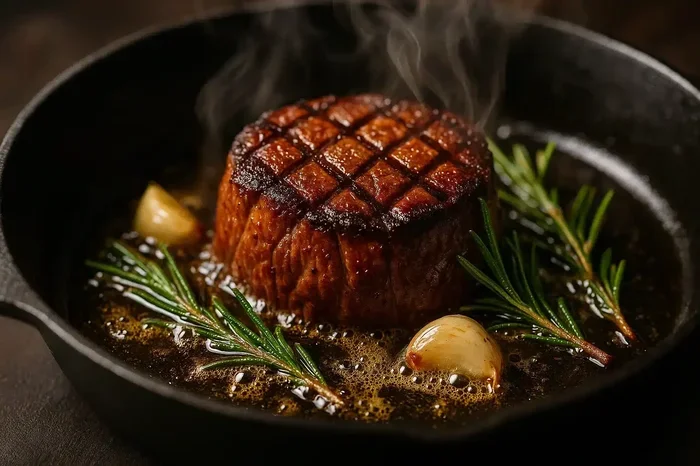
Use tongs to flip the steak to the other side. For extra flavor, you can add butter, smashed garlic cloves, and fresh thyme to the pan. Tilt the pan slightly and use a spoon to baste the melting butter over the steak. This adds richness and a beautiful golden color. Sear this side for another 2 to 3 minutes.
Quick Tip: If you like a crusty exterior, sear the edges of the steak too. Use tongs to hold the steak on its sides for about 30 seconds each. This gives you a complete brown ring around the entire steak.
Step 4: Transfer to the Oven
Once both sides are seared, place the entire skillet into the preheated oven. The oven will finish cooking the inside of the steak gently and evenly. The time in the oven depends on the thickness of your steak and your desired doneness.
Here is a general guide for oven time:
- 1.5-inch thick steak: about 5 to 7 minutes
- 2-inch thick steak: about 8 to 10 minutes
Use a meat thermometer to check the internal temperature. This is the most accurate way to know when your steak is done. Insert the thermometer into the thickest part of the steak, going straight to the center.
Step 5: Rest the Steak
Remove the skillet from the oven and take the steak out. Place it on a cutting board and let it rest for at least 5 minutes. This step is crucial. During cooking, the juices in the steak move toward the center. Resting allows them to redistribute throughout the meat.
If you skip this step, your steak will lose juice when you cut into it. A well-rested steak is tender, juicy, and full of flavor. While the steak rests, you can use the time to make a quick pan sauce or prepare your sides.
Step 6: Slice and Serve
After resting, slice the steak against the grain for maximum tenderness. Serve it immediately with your favorite sides. A simple pan sauce made from the drippings in the skillet adds a restaurant-quality touch. Drizzle it over the sliced steak and enjoy.
Perfect Temperatures and Timing Guide
Getting the internal temperature right is the key to perfect filet mignon. The oven finish brings the steak up to temperature gently, so precision matters. Here is a temperature guide for different levels of doneness.
| Doneness | Internal Temperature | Oven Time (2-inch steak at 400°F) |
|---|---|---|
| Rare | 120-125°F | 5-6 minutes |
| Medium Rare | 130-135°F | 7-8 minutes |
| Medium | 140-145°F | 9-10 minutes |
| Medium Well | 150-155°F | 11-12 minutes |
| Well Done | 160°F+ | 13+ minutes |
Remember that the temperature will rise about 5°F after you remove the steak from the oven. This is called carryover cooking. So if you want a medium-rare steak, pull it off at 125-130°F and it will reach 130-135°F while resting.
For how to cook filet mignon on stove then oven, medium-rare is the most popular choice. It gives you a warm pink center with the most flavor and juiciness. Filet mignon is naturally tender, so medium-rare highlights its best qualities. However, some people prefer medium for a slightly firmer texture. Both are perfectly fine.
Temperature Cheat Sheet for Different Steak Thicknesses
Thicker steaks need more oven time, but the temperature targets stay the same. Here is a quick reference:
- 1.5-inch steak: Sear 2-3 minutes per side, oven 5-7 minutes
- 2-inch steak: Sear 2-3 minutes per side, oven 8-10 minutes
- 2.5-inch steak: Sear 2-3 minutes per side, oven 10-12 minutes
The sear time stays consistent regardless of thickness because the stovetop heat is intense. The oven time is what changes. Always rely on the internal temperature rather than time alone. Every oven and every steak is slightly different.
Common Mistakes to Avoid
Even experienced cooks make mistakes when preparing filet mignon. Here are the most common errors and how to avoid them.
Starting with a Cold Steak
Putting a cold steak into a hot pan causes uneven cooking. The outside overcooks while the inside stays cold. Always let your steak reach room temperature before searing. This simple step makes a huge difference in the final result.
Not Drying the Surface
Moisture creates steam, and steam prevents browning. If your steak is wet, it will not get a good crust. Pat it thoroughly with paper towels before seasoning. This one small step separates a good steak from a great one.
Overcrowding the Pan
Cooking too many steaks at once drops the pan temperature. This leads to steaming instead of searing. Cook one or two steaks at a time for the best results. If you need to cook more, work in batches.
Skipping the Rest
Cutting into your steak right after cooking releases all the juices onto the cutting board. The steak ends up dry and less flavorful. Always let it rest for at least 5 minutes. This is one of the easiest ways to improve your steak.
Using the Wrong Oil
Olive oil has a low smoke point and will burn at searing temperatures. Use avocado oil, grapeseed oil, or another high smoke-point oil instead. A burnt oil will ruin the flavor of your steak.
Guessing Instead of Measuring
Relying on time alone instead of a meat thermometer is a recipe for inconsistency. Invest in a good instant-read thermometer. It removes all the guesswork and gives you perfect results every time.
Pro Tips for Next-Level Results
Once you have mastered the basics of how to cook filet mignon on stove then oven, try these pro tips to take your steak to the next level.
Make Herb Butter
Compound butter adds incredible flavor to filet mignon. Mix softened butter with minced garlic, chopped fresh herbs like parsley and thyme, and a pinch of salt. Place a dollop on top of the rested steak and let it melt over the meat. It adds richness and a beautiful finish.
Dry Brine Overnight
For even better results, dry brine your steak the night before. Season it generously with kosher salt and place it uncovered on a wire rack in the refrigerator. The salt draws out moisture, which then gets reabsorbed into the meat. This seasons the steak deeply and creates an even drier surface for searing.
Let the Pan Do the Work
Do not press down on the steak with a spatula. Pressing squeezes out the juices and prevents a good crust from forming. Let the steak sit undisturbed while it sears. Trust the heat of the pan to do its job.
Add Aromatics During the Sear
After flipping the steak, add butter, garlic, and fresh herbs to the pan. As the butter melts, tilt the pan and spoon it over the steak repeatedly. This technique, called basting, infuses the steak with rich, savory flavors and gives it a gorgeous golden color.
Finish with a Torch
If you want an extra crispy crust, use a kitchen torch after the oven finish. This gives you a crusty exterior that rivals any steakhouse. It is a fun trick that impresses your guests and adds a professional touch.
Pair with the Right Sides
Filet mignon is rich and tender, so it pairs well with simple sides. Roasted vegetables, garlic mashed potatoes, or a fresh side salad complement the steak without overwhelming it. Keep the sides light and let the steak be the star of the plate.
Expert Insights on Stovetop-to-Oven Steak
Chef Maria Lopez, a professional steakhouse chef with over 15 years of experience, shares her take on the stove-to-oven method. “The stovetop-to-oven approach is the foundation of great steak cooking at home,” she says. “It gives home cooks the same control that professional kitchens have. The sear creates flavor, and the oven creates consistency.”
She also emphasizes the importance of resting. “So many people skip this step, and it shows in the final plate,” she explains. “Give your steak at least five minutes to rest. Your patience will be rewarded with every bite.”
According to the American Meat Science Association, the carryover cooking effect can raise the internal temperature of a steak by 3 to 5 degrees after removal from heat. This is why pulling the steak slightly before your target temperature is so important. It is a small detail that makes a big difference in the final result.
Food scientists also note that the Maillard reaction, which creates the brown crust, begins at temperatures above 280°F. This is why a ripping hot pan is essential. The higher the surface temperature, the faster and more intense the browning reaction. This is exactly why cast iron skillets are the go-to choice for searing steak.
When it comes to how to cook filet mignon on stove then oven, the science is straightforward. You are simply using two different heat sources to achieve two different goals. The stovetop creates the crust. The oven creates the even cook. Together, they produce a steak that is greater than the sum of its parts.
Key Takeaways
- Sear then oven method: Starting on the stove and finishing in the oven ensures an even cook from edge to center.
- Cast iron skillet is key: A heavy pan holds heat well and creates a beautiful crust on your steak.
- Use a meat thermometer: Internal temperature is the most reliable way to know your steak is done perfectly.
- Rest your steak: Letting the steak rest after cooking keeps the juices locked inside for a tender bite.
- Pat the steak dry: A dry surface sears better and gives you that crispy, golden exterior.
- Season simply: Salt, pepper, and garlic go a long way with a high-quality cut like filet mignon.
- Oven temperature matters: A moderate oven temp of 400°F finishes the steak without overcooking it.
Frequently Asked Questions
Can I use a different type of pan for how to cook filet mignon on stove then oven?
You can use any oven-safe pan, but cast iron works best because it retains heat exceptionally well. Stainless steel pans also work great. Avoid nonstick pans because they cannot handle the high heat needed for searing. The right pan makes a noticeable difference in the quality of the crust.
How thick should my filet mignon be for the stove-to-oven method?
For best results, your filet mignon should be at least 1.5 inches thick. Thicker cuts of 2 inches work even better because they allow for a good sear without overcooking the center. Thinner steaks can be cooked entirely on the stovetop if you prefer.
What is the best internal temperature for filet mignon?
Medium-rare at 130-135°F is the most popular and recommended temperature for filet mignon. It keeps the steak juicy and tender while bringing out the best flavor. You can adjust to your preference, but remember that carryover cooking will raise the temperature a few degrees after you remove the steak from the oven.
Do I need to cover the steak in the oven?
No, you do not need to cover the steak. Leave it uncovered so the crust stays crispy. Covering it would trap steam and soften the sear you worked so hard to create. The oven’s dry heat is perfect for finishing the steak without affecting the crust.
Can I sear filet mignon in butter instead of oil?
Butter has a lower smoke point than most cooking oils, so it can burn at searing temperatures. It is better to use a high smoke-point oil like avocado oil for the initial sear. You can then add butter during the basting phase for extra flavor. This gives you the best of both worlds.
How long should I let my steak rest after cooking?
Let your filet mignon rest for at least 5 minutes on a cutting board. For thicker steaks, you can rest for up to 10 minutes. During this time, the juices redistribute throughout the meat. Cutting too early causes the juices to run out, leaving your steak less flavorful and tender.
Conclusion
How to cook filet mignon on stove then oven is a technique that anyone can master with a little practice. It gives you restaurant-quality steak in the comfort of your own home. The method is simple, reliable, and produces consistently delicious results.
Start with a good cut of beef tenderloin, pat it dry, season it well, and sear it in a hot cast iron skillet. Then finish it in the oven at 400°F until it reaches your desired internal temperature. Let it rest, slice it against the grain, and serve it with your favorite sides.
The beauty of this method is that it works every time. Whether you are cooking for a special dinner or a weeknight treat, the stove-to-oven approach delivers. You will impress your family and guests with a steak that tastes like it came from a fine dining restaurant.
Now that you know the secrets of how to cook filet mignon on stove then oven, it is time to put them into practice. Grab a good cut of filet mignon, heat up your skillet, and enjoy the process. Great steak starts with great technique, and you now have all the tools you need to succeed.