How To Make Croutons In The Oven From Scratch Easily
Making croutons in the oven from scratch is one of the easiest kitchen tricks you can learn. With just a few slices of bread, olive oil, and your favorite seasonings, you can create crispy homemade croutons that taste far better than anything from a store-bought bag. This guide walks you through every step, from choosing the right bread to baking them to golden perfection.
There is nothing quite like a bowl of fresh soup or a crisp garden salad topped with warm, golden croutons. If you have ever bought a bag of pre-made ones from the grocery store, you know they can taste flat and leave a lot to be desired. The good news is that making croutons in the oven from scratch is incredibly simple, fast, and rewarding.
Once you try homemade croutons, you will never go back to the boxed kind. All you need is some bread, a little olive oil, and a few seasonings. Whether you are a beginner cook or a seasoned home chef, this method will give you crispy oven-baked croutons every single time. Let us dive into everything you need to know.
Key Takeaways
- Simple Ingredients: You only need bread, olive oil, and seasonings to make amazing croutons at home.
- Oven-Baked Is Best: Baking gives you even crunch and lets you customize flavors easily.
- Use Leftover Bread: Stale or day-old bread works perfectly and reduces food waste.
- Endless Flavor Options: Try garlic, herb, parmesan, or spicy variations to match any dish.
- Storage Is Easy: Properly stored homemade croutons last up to a week in an airtight container.
- Saves Money: Making your own is cheaper and tastes way better than store-bought versions.
- Quick Process: From prep to oven, the whole thing takes less than 20 minutes.
📑 Table of Contents
- Why Homemade Croutons Beat Store-Bought Every Time
- What You Need To Make Croutons In The Oven
- Step-By-Step Guide To Making Croutons In The Oven
- Creative Variations and Flavor Ideas
- Tips For Perfectly Crispy Croutons Every Time
- Common Mistakes To Avoid When Making Croutons
- Storing And Using Your Homemade Croutons
- Expert Insights On Making the Best Croutons
- Frequently Asked Questions
- Conclusion
Why Homemade Croutons Beat Store-Bought Every Time
Before we get into the how-to, let us talk about why you should even bother making your own. The difference between homemade croutons and the ones sitting on a shelf at the supermarket is night and day. Here is why oven-made croutons win every time.
Freshness and Flavor Control
When you make croutons in the oven at home, you control every single ingredient. Store-bought croutons often contain preservatives, excess sodium, and artificial flavors that you simply do not need. With a homemade version, you choose the bread, the oil, and the seasonings. That means no mystery ingredients and no unwanted additives.
You can also adjust the flavor profile to match whatever dish you are serving. Want a herby crunch for your Italian soup? Done. Prefer a garlicky kick for your Caesar salad? Easy. The flexibility is one of the biggest advantages of baking croutons at home.
Texture That Actually Stays Crispy
One of the biggest complaints about store-bought croutons is that they go soggy fast. Homemade oven croutons have a much better crunch-to-shelf-life ratio because you bake them to the right level of dryness. The oven circulates heat evenly, which means every cube gets that satisfying snap when you bite into it.
Many people also find that homemade bread croutons taste better because they use real, quality bread instead of processed cubes filled with fillers. The result is a richer, more satisfying crunch that elevates any meal.
Saving Money and Reducing Waste
Here is a practical benefit that does not get talked about enough: making croutons from scratch saves you money. A bag of store-bought croutons can cost three to five dollars, and it only makes a small portion. With homemade ones, you use bread you already have, which means the cost is practically zero.
It is also a fantastic way to use up stale bread. Instead of throwing out bread that has gone a bit firm, you can turn it into something delicious. This is a win for your wallet and a win for reducing food waste at the same time.
What You Need To Make Croutons In The Oven
The ingredient list for oven-baked croutons is shockingly short. You probably already have everything in your kitchen right now. Here is what you need to get started.
Ingredients
- Bread: A loaf of French bread, sourdough, or even white sandwich bread works great. Stale or day-old bread is ideal because it is drier and crisps up better in the oven.
- Olive Oil: Extra virgin olive oil gives the best flavor, but any cooking oil will work. The oil helps the seasoning stick and promotes even browning.
- Seasonings: Salt, black pepper, garlic powder, and dried herbs like oregano, basil, or thyme are classic choices. You can also add parmesan cheese for a savory twist.
- Optional Add-Ins: A drizzle of melted butter, a sprinkle of smoked paprika, or a pinch of red pepper flakes can take your croutons to the next level.
Equipment You Will Need
You do not need any fancy tools to make croutons in the oven. Here is the basic setup:
- A sharp knife or bread cutter for slicing
- A large mixing bowl for tossing the cubes
- A baking sheet lined with parchment paper or a silicone mat
- An oven preheated to the right temperature (more on that below)
That is it. No special crouton maker or gadget required. A standard oven and a baking sheet are all you need to produce outstanding crispy croutons from scratch.
Step-By-Step Guide To Making Croutons In The Oven
Now that you have your ingredients and tools ready, let us walk through the process of making croutons in the oven from scratch. The steps are straightforward, and the entire process takes about 15 to 20 minutes.
Step One: Cut Your Bread Into Cubes
Start by slicing your bread into pieces that are about one inch thick. Then cut those slices into rough cubes, roughly the size of a dice. You want the cubes to be fairly uniform so they bake evenly. If some pieces are smaller, they may burn faster, so try to keep them similar in size.
Pro tip: Do not make the cubes too small. Pieces that are about 3/4 to 1 inch hold up best during baking and give you a satisfying crunch without turning into crumbs.
Step Two: Toss the Cubes With Oil and Seasonings
Place your bread cubes in a large mixing bowl. Drizzle them with olive oil and add your chosen seasonings. Toss everything together with your hands until every cube is evenly coated. You want the oil to lightly cover the surface of each piece without pooling at the bottom of the bowl.
The general ratio is about one tablespoon of olive oil for every two cups of bread cubes. Adjust based on how much bread you are using and how crunchy you like your croutons for salad or soup.
Step Three: Spread Them on a Baking Sheet
Line a baking sheet with parchment paper and spread the coated cubes out in a single layer. This is a crucial step. If you crowd the cubes too close together, they will steam instead of crisp up, and you will end up with soft croutons instead of crunchy ones.
Leave a little space between each cube so hot air can circulate around them. One baking sheet can usually hold about 4 to 6 cups of bread cubes, depending on the size of your oven.
Step Four: Bake at the Right Temperature
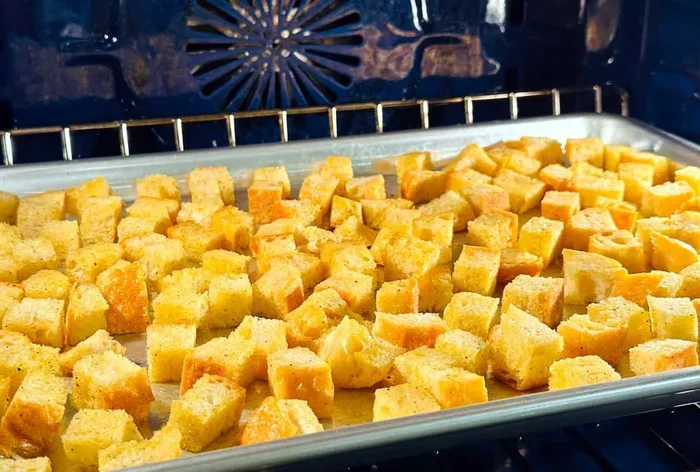
Preheat your oven to 375 degrees Fahrenheit (190 degrees Celsius). Place the baking sheet on the middle rack and bake for about 10 to 15 minutes. Halfway through, pull the tray out and toss the cubes gently to flip them over. This ensures they brown evenly on all sides.
You will know your oven-baked croutons are done when they are golden brown on the edges and feel firm to the touch. The center should sound slightly hollow when you tap two cubes together. If they still feel soft, give them another minute or two.
Step Five: Cool and Store
Once they come out of the oven, spread the croutons on a wire rack or a clean kitchen towel to cool. They will crisp up even more as they cool down, so do not skip this step. Resist the urge to eat them all right away, even though that is really tempting.
Once fully cooled, store your homemade croutons in an airtight container at room temperature. They will stay crispy for up to one week. If you live in a humid climate, you might want to store them in the pantry rather than a bread box, since moisture is the enemy of crunch.
Creative Variations and Flavor Ideas
One of the best things about making croutons in the oven from scratch is that you can get as creative as you want. The basic recipe is a blank canvas, and you can tailor the flavors to suit any dish or mood. Here are some delicious variations to try.
Garlic Croutons
For classic garlic croutons for soup, add a teaspoon of minced fresh garlic or a half teaspoon of garlic powder to the oil and seasoning mix. You can also toss in a few finely chopped fresh garlic cloves before baking. The result is a deeply savory crunch that pairs perfectly with tomato soup or minestrone.
Herb-Infused Croutons
Dried herbs are your best friend here. Mix in a teaspoon each of dried oregano, thyme, and rosemary along with a pinch of salt and pepper. These herb-seasoned croutons are fantastic on salads, especially Caprese or Greek salad. The herbal aroma fills your kitchen while they bake, which is a nice bonus.
Parmesan Croutons
Sprinkle grated parmesan cheese over the cubes before they go into the oven. The cheese will melt slightly and turn golden, creating a salty, umami-rich crunch. These work beautifully on Caesar salads or as a topping for creamy soups. Just be sure to watch them closely, as cheese can go from golden to burnt quickly.
Cinnamon-Sugar Croutons for Dessert
Here is a fun twist most people do not think about. Toss your cubes with a little butter, cinnamon, and sugar, then bake until golden. These sweet croutons are amazing when sprinkled over ice cream, fruit salad, or even yogurt. They add a warm, crunchy element that takes a simple dessert to the next level.
Spicy Croutons
If you like a little heat, add a pinch of cayenne pepper, smoked paprika, or chili flakes to your oil and seasoning mix. These spicy croutons are great on Mexican-inspired salads, chili, or even atop a bowl of ramen. The kick of heat contrasts nicely with cool, creamy, or mild dishes.
Tips For Perfectly Crispy Croutons Every Time
Even though the basic process is simple, there are a few tricks that can take your crouton recipe from good to outstanding. Here are some expert tips that make a real difference.
Use Day-Old or Stale Bread
Fresh bread contains more moisture, which can lead to softer croutons that do not crisp up as well. Stale or day-old bread has already lost some of its moisture, so it bakes up crunchier and more evenly. If your bread is still fresh, you can leave the slices out on the counter for a few hours or overnight to dry them out slightly.
Do Not Skip the Tossing Step
Tossing the cubes halfway through baking ensures even browning on all sides. Without this step, the bottoms might burn while the tops stay pale. A simple flip with a spatula or a gentle shake of the baking sheet does the trick.
Keep an Eye on Them
Ovens vary, and bread thickness affects baking time. Start checking your croutons at the 10-minute mark. You want them to be golden brown, not dark brown or burnt. Crispy croutons should have a light, even color across all sides. If you notice some cubes browning faster than others, remove those and keep the rest going.
Let Them Cool Completely
This cannot be stressed enough. Croutons continue to crisp up as they cool. If you bite into one straight from the oven, it might feel a little soft inside. Give them at least 15 to 20 minutes on a wire rack, and you will notice a big difference in texture.
Use Parchment Paper
Lining your baking sheet with parchment paper prevents sticking and makes cleanup a breeze. It also promotes even airflow around the cubes, which helps them bake more consistently. Skip the greasing of the sheet unless you are using a very sticky bread, as the oil on the cubes is usually enough.
Experiment With Different Bread Types
Not all bread is created equal when it comes to making croutons in the oven. Sourdough adds a tangy flavor, ciabatta gives a rustic chew, and brioche creates a richer, slightly sweet crouton. French bread is the most classic choice, but do not be afraid to try whatever you have on hand. Each type brings its own character to the final product.
Common Mistakes To Avoid When Making Croutons
Even though baking croutons at home is straightforward, there are a few common pitfalls that can ruin the results. Here is what to watch out for.
- Cutting the cubes too small: Tiny pieces will burn quickly and turn into bitter crumbs. Stick to at least a three-quarter-inch cube for the best results.
- Using too much oil: Excess oil makes the croutons greasy rather than crispy. A light, even coating is all you need.
- Overcrowding the baking sheet: Croutons need space for hot air to circulate. If you pile them on top of each other, they will steam and turn mushy.
- Not seasoning enough: Since the bread is bland on its own, under-seasoned croutons will taste flat. Be generous with salt and your chosen seasonings.
- Storing them while still warm: Trapped heat creates condensation inside the container, which makes your croutons soggy. Always let them cool completely before storing.
Storing And Using Your Homemade Croutons
Once you have a batch of fresh homemade croutons, you will want to know how to keep them at their best and how to use them up. Here is everything you need to know.
How To Store Croutons
The best way to store oven-baked croutons is in an airtight container at room temperature. A glass jar, a resealable plastic bag, or a bread tin all work well. When stored properly, they stay crispy for up to seven days.
Avoid storing them in the refrigerator, as the cool, moist environment can make them lose their crunch faster. If you have made a large batch and will not use them all within a week, consider freezing them. Spread them on a tray to freeze individually, then transfer to a freezer bag. They will keep for up to three months in the freezer.
Best Ways To Use Homemade Croutons
Homemade croutons are incredibly versatile. Here are some of the best ways to enjoy them:
- On salads: Tossed green salads, pasta salads, and grain bowls all benefit from a handful of crunchy croutons for salad.
- In soups: Drop a few into a hot bowl of tomato soup, broccoli cheddar, or French onion for added texture.
- As a side dish: Seasoned croutons with a little olive oil and herbs can be served alongside a meal as a simple side.
- In stuffing: Use them as a base for bread stuffing or dressing for poultry and roasts.
- On casseroles: Sprinkle them on top of baked casseroles for a crispy golden finish.
- In desserts: Sweet croutons add a fun crunch to ice cream sundaes, fruit parfaits, and yogurt bowls.
Expert Insights On Making the Best Croutons
Making croutons in the oven from scratch is a skill that once learned, becomes second nature. Professional chefs and home cooks alike agree that the quality of your bread is the single most important factor. A good loaf of fresh bread or a well-stored stale loaf will produce far superior results than a cheap, preservative-heavy pre-sliced option.
Another expert tip is to add a thin layer of seasoning after the croutons come out of the oven. The heat can dull some flavors, so a light sprinkle of flaky sea salt or a dusting of dried herbs right after baking can make a noticeable difference in taste.
Some cooks also recommend using a combination of olive oil and melted butter for a richer flavor profile. The butter adds a depth of taste that pure olive oil alone cannot achieve, and it helps the croutons brown faster. Just be careful not to use too much, or the croutons can become overly greasy.
The beauty of homemade croutons lies in their simplicity and customizability. You control every variable, from the size of the cubes to the intensity of the seasoning. Once you start making your own, you will wonder how you ever relied on store-bought versions.
Frequently Asked Questions
Can I use any type of bread to make croutons in the oven?
Yes, you can use virtually any type of bread to make croutons in the oven from scratch. French bread, sourdough, white bread, whole wheat, and even gluten-free loaves all work. Just keep in mind that denser breads may need a few extra minutes in the oven, while softer breads might benefit from being left out to dry slightly before baking.
How long do homemade croutons last?
When stored in an airtight container at room temperature, homemade croutons stay fresh and crispy for up to one week. If you freeze them, they can last for up to three months. Always make sure they are completely cool before storing to prevent moisture buildup that can make them soggy.
Can I make croutons without olive oil?
Absolutely. While olive oil is the most common choice, you can use any neutral cooking oil like vegetable oil, canola oil, or melted coconut oil. Some people even use a light coating of melted butter for extra richness. The oil helps the seasoning stick and promotes even browning, so a small amount is recommended for the best texture.
Why are my croutons turning out soft instead of crispy?
The most common reason for soft croutons is overcrowding on the baking sheet. If the cubes are too close together, steam gets trapped and prevents them from crisping up. Other reasons include using fresh bread with too much moisture, not baking long enough, or not flipping them halfway through. Make sure to spread them in a single layer and check them at the 10-minute mark.
Can I add fresh herbs instead of dried herbs to my croutons?
Yes, you can use fresh herbs, but you will need to use more of them since fresh herbs have higher moisture content. A good rule of thumb is to use about three times the amount of fresh herbs compared to dried. Also, be aware that fresh herbs may slightly increase the baking time because of the extra moisture they release.
Can I make croutons ahead of time for a dinner party?
Definitely. Making croutons in the oven ahead of time is a great way to save time on the day of your event. You can bake them up to two days in advance and store them in an airtight container at room temperature. If they lose some crunch during storage, you can pop them back in a 300-degree oven for three to five minutes to refresh them right before serving.
Conclusion
Making croutons in the oven from scratch is one of those simple kitchen skills that makes a surprisingly big difference in your meals. From the moment you pull that golden, crispy tray out of the oven, you will understand why homemade croutons are so much better than anything from a store shelf. The process is fast, affordable, and endlessly customizable to suit your taste.
With just bread, olive oil, and a handful of seasonings, you can create crispy croutons that elevate soups, salads, and even desserts. The tips and variations shared in this guide give you everything you need to get started and keep experimenting. Whether you prefer a classic garlic version or want to try something bold like cinnamon-sugar, the possibilities are truly limitless.
So next time you have some leftover bread or a simple meal that needs a little something extra, remember that the best croutons for salad or soup come straight from your own oven. Give it a try, and you will never look at store-bought croutons the same way again.