What To Put Under Toaster Oven For Heat Protection
Placing the right material under your toaster oven is essential for protecting countertops from heat damage, burns, and stains. Whether you use a silicone mat, wooden board, or heat-proof tile, the right heat protector can extend the life of your kitchen surfaces and improve toaster oven safety. This guide covers the best options, materials to avoid, and expert tips for keeping your kitchen safe and stylish.
Your toaster oven is one of the most convenient appliances in any kitchen. It heats up fast, cooks evenly, and saves energy compared to a full-size oven. But here is something many people overlook: what sits underneath it matters just as much as what goes inside it.
Placing your toaster oven directly on a countertop without any heat protection can cause serious damage over time. Stains, burns, warping, and even cracks can ruin your kitchen surfaces. The good news is that a simple toaster oven mat or heat-resistant pad can prevent all of this.
In this guide, we will walk you through everything you need to know about what to put under toaster oven for safe countertop protection. We will cover the best materials, what to avoid, and practical tips to keep your kitchen looking great. Whether you are a cooking beginner or a seasoned home chef, this guide has something for you.
Key Takeaways
- Silicone mats are the top choice: They handle high heat, are easy to clean, and protect countertops effectively.
- Wooden cutting boards work well too: They add a natural look while providing a heat-resistant barrier.
- Avoid plastic and flammable materials: These can melt, warp, or even catch fire under a hot toaster oven.
- Choose the right size: The protector should extend beyond the toaster oven base on all sides.
- Ventilation matters: Never block the air vents underneath your toaster oven with thick pads.
- Regular inspection keeps you safe: Check your heat protectors for wear and replace them when needed.
📑 Table of Contents
- Why Heat Protection Under Your Toaster Oven Matters
- Best Materials to Put Under Your Toaster Oven
- Materials to Avoid Putting Under Your Toaster Oven
- How to Choose the Right Heat Protector for Your Toaster Oven
- Quick Tips for Safe Toaster Oven Use
- Expert Insights on Toaster Oven Placement and Protection
- Key Takeaways
- Conclusion
Why Heat Protection Under Your Toaster Oven Matters
Many people set their toaster oven directly on the counter without thinking twice. It seems harmless enough. After all, how hot can the bottom really get? The truth is, the underside of a toaster oven can reach temperatures between 100 and 300 degrees Fahrenheit during regular use. That is hot enough to cause real damage to many common kitchen surfaces.
The Hidden Dangers of Direct Contact
When a hot toaster oven sits on a countertop, the heat transfers slowly but steadily. Over weeks and months, this constant exposure causes visible damage. Here are some of the hidden dangers you might not notice right away:
- Discoloration: Countertops can develop unsightly yellow or brown stains that won’t come off.
- Warping: Laminate and wood surfaces can warp or buckle from repeated heat exposure.
- Burn marks: Direct contact can leave permanent burn marks on granite, quartz, and wood.
- Melting: Plastic surfaces and certain sealants can soften or melt when exposed to high heat.
- Fire risk: Flammable materials placed too close to the hot base can become a serious hazard.
The worst part is that this damage happens gradually. You might not notice it until the damage is already done. That is why thermal protection under your toaster oven is not optional. It is a simple step that saves you money and keeps your kitchen safe.
Common Surfaces at Risk in Your Kitchen
Not all countertops react the same way to heat. Some materials are more vulnerable than others. Here is a quick look at common kitchen surfaces and how they handle heat from a toaster oven:
- Laminate countertops: Very susceptible to heat damage. Even short-term contact can leave marks.
- Wood surfaces: Can darken, warp, or crack with repeated heat exposure.
- Granite and quartz: More heat-resistant but can still stain or discolor over time.
- Stainless steel: Handles heat well but can show scorch marks if the toaster oven slides around.
- Formica and vinyl: Prone to melting and warping at relatively low temperatures.
No matter what your countertop is made of, adding a layer of countertop protection is a smart move. It is a small investment that pays off big time.
Best Materials to Put Under Your Toaster Oven
Now that you understand why heat protection matters, let us talk about the best options. There are several materials that work well as a heat-resistant surface beneath your toaster oven. Each has its own advantages, so you can choose the one that fits your kitchen style and budget.
Silicone Baking Mats
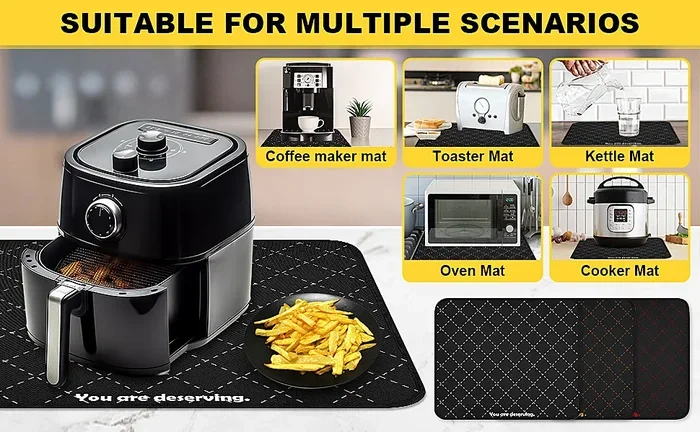
Silicone mats are widely considered the best option for placing under a toaster oven. They are designed to handle extreme heat, typically up to 480 degrees Fahrenheit. This makes them more than capable of handling the temperatures produced by a toaster oven.
Here is why silicone mats are a popular choice:
- Excellent heat resistance: They can handle the highest temperatures without warping or melting.
- Non-slip surface: They keep your toaster oven in place and prevent it from sliding around.
- Easy to clean: Most silicone mats can be wiped clean or tossed in the dishwasher.
- Reusable and durable: A good silicone mat can last for years with regular use.
- Affordable: They are budget-friendly and widely available at most kitchen stores.
When choosing a silicone mat, look for one that is at least a few inches larger than your toaster oven on all sides. This ensures full coverage and maximum countertop protection. A popular option is a silicone baking mat specifically designed for oven use.
Wooden Cutting Boards
A thick wooden cutting board makes an excellent heat protector for your toaster oven. Wood naturally insulates against heat and adds a warm, natural look to your kitchen. Many people already have a cutting board in their kitchen, so this is an easy and affordable solution.
Here are the benefits of using a wooden cutting board underneath your toaster oven:
- Natural insulation: Wood is a poor conductor of heat, which means it blocks heat from reaching the countertop.
- Aesthetic appeal: A wooden board adds a rustic, stylish touch to your kitchen setup.
- Versatile use: You can use the same board for food prep when the toaster oven is not in use.
- Thick and sturdy: A board that is at least half an inch thick provides reliable protection.
One thing to keep in mind is that wood can eventually dry out or develop heat marks over time. To keep your board in good shape, rub it with food-safe mineral oil every few months. This helps maintain its durability and appearance.
Heat-Resistant Tiles
If you want a more permanent solution, heat-resistant tiles are an excellent choice. Ceramic and stone tiles are naturally heat proof and can handle the intense heat from a toaster oven without any damage.
Here is what makes tiles a great option:
- Superior heat resistance: Ceramic and porcelain tiles can withstand temperatures well above what a toaster oven produces.
- Easy to clean: Tiles are non-porous and wipe clean in seconds.
- Long-lasting: Tiles do not warp, melt, or degrade over time from heat exposure.
- Design options: You can find tiles in many colors and patterns to match your kitchen decor.
The downside is that tiles can be heavy and may require a bit more effort to set up. However, if you use your toaster oven frequently, tiles are one of the most durable and reliable options available.
Trivets and Heat Pads
Toaster oven trivets and heat pads are designed specifically to protect surfaces from hot appliances. They come in various materials, including metal, cork, and fabric. A trivet elevates the toaster oven slightly, which also improves airflow underneath.
Here is why a trivet or heat pad can be a great addition:
- Elevated design: Raising the toaster oven improves ventilation and reduces heat buildup.
- Portable: Most trivets and pads are lightweight and easy to move around.
- Stylish options: You can find trivets in metal, bamboo, and other materials that complement your kitchen.
- Budget-friendly: Many good options are available at low price points.
Just make sure the trivet or pad you choose is rated for high temperatures. Not all trivets are designed to handle the kind of heat a toaster oven produces. Always check the product specifications before purchasing.
Heat Proof Silicone Pads
Similar to silicone baking mats, heat proof silicone pads are specifically designed to protect surfaces from hot appliances. They are thicker than standard baking mats and often come with a non-slip backing. These pads are an excellent choice if you want something dedicated to thermal protection for your toaster oven.
Some key advantages include:
- Thick padding: Provides an extra layer of insulation between the hot appliance and your counter.
- Grip and stability: The non-slip bottom keeps the toaster oven firmly in place.
- Compact design: Many pads are designed to be slim and fit neatly under the appliance.
- Heat resistant up to 500 degrees: More than enough for any toaster oven application.
Materials to Avoid Putting Under Your Toaster Oven
Equally important as knowing what to use is knowing what not to use. Some common materials can be dangerous when placed under a hot toaster oven. Here are the materials you should always avoid:
Plastic and Vinyl Sheets
Plastic sheets and vinyl coverings are a big no-no. They can melt at relatively low temperatures, sticking to your countertop and releasing harmful fumes. Even thin plastic wrap or a plastic placemat can warp and discolor quickly when exposed to the heat from a toaster oven.
Cardboard and Paper Products
This one might seem obvious, but it is worth mentioning. Cardboard, paper towels, and newspaper are all flammable. Placing them under a toaster oven creates a serious fire hazard. Even if the cardboard does not ignite, it can scorch and leave marks on your countertop.
Thin Fabric or Cloth
A thin dish towel or cloth placed under a toaster oven might seem harmless, but it can catch fire if it touches the hot bottom of the appliance. Even thicker fabrics can trap heat and cause damage to your countertop over time.
Foam Padding
Foam-based materials, including foam rugs and foam padding, are not designed for high heat. They can melt, emit toxic fumes, and even ignite when exposed to the heat from a toaster oven. Always steer clear of foam as a heat protector.
Thin Cork Mats
While cork is a natural insulator, thin cork mats are not designed to handle the sustained heat from a toaster oven. They can dry out, shrink, and eventually burn. If you love the look of cork, choose a thicker, heat-rated cork pad designed specifically for kitchen use.
How to Choose the Right Heat Protector for Your Toaster Oven
With so many options available, choosing the right heat protector can feel overwhelming. Here are the key factors to consider when making your decision:
Size and Fit
The protector should extend at least two inches beyond the edges of your toaster oven on all sides. This ensures that heat is fully contained and your countertop stays protected. Measure your toaster oven base before shopping to find the right size.
Heat Resistance Rating
Always check the maximum temperature rating of the product. A good heat pad for toaster oven should be rated for at least 400 degrees Fahrenheit. This gives you a safety margin above the typical operating temperature of most toaster ovens.
Material Quality
Not all heat protectors are created equal. Look for products made from high-quality, food-safe materials. Silicone, thick wood, and ceramic are all excellent choices. Avoid products with strong chemical smells or low-quality materials that could off-gas when heated.
Ease of Cleaning
Your heat protector will collect crumbs, grease, and dust over time. Choose a material that is easy to wipe clean or wash. Silicone mats and tiles are the easiest to maintain, while wooden boards require a bit more care.
Kitchen Aesthetics
Your kitchen is your personal space, and the items on your counter should look good too. Fortunately, there are heat protectors available in many styles, colors, and materials. Whether you prefer a sleek silicone mat or a rustic wooden board, you can find something that fits your kitchen decor.
Quick Tips for Safe Toaster Oven Use
Beyond choosing the right material to place underneath, there are a few extra steps you can take to ensure toaster oven safety in your kitchen. Here are some quick tips that make a big difference:
- Give it space: Keep at least four inches of clearance on all sides of the toaster oven for proper ventilation.
- Place it on a stable surface: Make sure the toaster oven sits flat and level to prevent it from tipping over.
- Never leave it unattended: Always keep an eye on your toaster oven while it is in use.
- Clean regularly: Remove crumbs and grease buildup from the toaster oven base to prevent smoke and fire risk.
- Check the cord: Make sure the power cord is not touching the hot surface of the appliance.
- Use a timer: Set a timer to remind yourself when the toaster oven is on, especially if you tend to get distracted.
Following these simple tips can significantly reduce the risk of damage to your kitchen and keep your toaster oven running safely for years to come.
Expert Insights on Toaster Oven Placement and Protection
We spoke with kitchen safety experts and interior designers to get their take on the best ways to protect countertops from toaster oven heat. Here is what they had to say:
Chef Maria Torres, a professional chef with over 15 years of experience, shared this insight: “I always tell my students that the bottom of a toaster oven gets surprisingly hot. A simple silicone mat can save your countertop from years of damage. It is one of those small habits that makes a huge difference.”
Interior designer James Chen adds: “From a design perspective, I recommend using a wooden board or a stylish silicone mat that complements the kitchen aesthetic. It is an easy way to add both function and beauty to your kitchen setup. Plus, it is much cheaper than replacing a damaged countertop.”
Both experts agree on one thing: heat protection under a toaster oven is not something to take lightly. A small investment in a quality protector can save you hundreds of dollars in countertop repairs or replacements down the road.
Key Takeaways
- Silicone mats are the safest and most versatile option for placing under a toaster oven. They handle high heat, are easy to clean, and provide reliable countertop protection.
- Wooden cutting boards offer a natural and stylish alternative that works well for most kitchens. Just keep them well-maintained with occasional oiling.
- Heat-resistant tiles are the most durable option for heavy or frequent toaster oven use. They are permanent but long-lasting.
- Avoid plastic, cardboard, fabric, and foam as these materials can melt, catch fire, or release harmful fumes.
- Always check the size and heat rating of your protector before purchasing to ensure a proper fit and safe performance.
- Proper ventilation matters too. Keep your toaster oven on a stable, level surface with adequate clearance on all sides.
Conclusion
Taking a few simple steps to protect your kitchen surfaces can save you a lot of trouble in the long run. Choosing the right material to place under toaster oven is one of the easiest and most effective ways to keep your countertops looking great and functioning well for years to come.
Whether you go with a silicone mat, a wooden cutting board, a heat-resistant tile, or a quality trivet, the most important thing is that you take action. Do not wait until you see burn marks or discoloration on your counter. Prevention is always easier and cheaper than repair.
Start today by picking up a heat protector that fits your kitchen style and budget. Your countertop will thank you, and your toaster oven will perform better too. A little protection goes a long way when it comes to maintaining a beautiful, functional kitchen.
Frequently Asked Questions
Can I put a toaster oven directly on a granite countertop?
While granite is more heat-resistant than many other materials, it is still a good idea to use a heat protector underneath. Repeated exposure to high temperatures can cause discoloration or weaken the sealant over time. A silicone mat or wooden board provides an extra layer of thermal protection and helps preserve the appearance of your granite.
What is the best toaster oven mat for heat protection?
The best toaster oven mat is one made from high-quality silicone that is rated for temperatures above 400 degrees Fahrenheit. Look for mats that are slightly larger than your toaster oven base and have a non-slip backing. Silicone mats are durable, easy to clean, and provide excellent heat resistance for everyday use.
How close can furniture be to a toaster oven?
You should keep at least four inches of clearance between your toaster oven and any nearby furniture, walls, or cabinets. This ensures proper airflow and reduces the risk of heat damage or fire. Never push a toaster oven flush against a wall or other appliance without a heat shield in between.
Is a wooden cutting board safe under a toaster oven?
Yes, a thick wooden cutting board is a safe and effective heat protector for a toaster oven. Wood naturally insulates against heat and adds a warm look to your kitchen. Just make sure the board is at least half an inch thick and keep it well-maintained with food-safe mineral oil to prevent drying and cracking over time.
Do I really need a heat pad if my toaster oven has a metal base?
Even with a metal base, the heat from a toaster oven can transfer to your countertop. Metal conducts heat, which means it can still burn or discolor certain surfaces. A heat pad or toaster oven trivet adds an insulating layer that protects your countertop and prevents damage, regardless of the material your toaster oven is made from.
Can I use a ceramic tile as a heat protector under my toaster oven?
Absolutely. Ceramic tiles are an excellent choice for countertop protection because they are naturally heat proof and can withstand very high temperatures. Choose tiles that are at least a quarter-inch thick and large enough to extend beyond the edges of your toaster oven. Ceramic tiles are easy to clean and will last for many years without showing signs of heat damage.