How Long To Dry Bread In Oven For Perfect Stuffing
Drying bread in the oven for stuffing is simple, fast, and produces far better results than leaving bread out on the counter. Most recipes call for drying bread cubes at 300°F for about 10 to 15 minutes, but the exact time depends on your bread type, cube size, and desired texture. This guide covers everything you need to know about how long to dry bread in oven for stuffing, from timing and temperature to the best bread choices and common mistakes to avoid.
There is nothing quite like a warm, flavorful stuffing alongside a roasted turkey or a hearty roast chicken. And the secret to great homemade stuffing starts long before you add any herbs, broth, or vegetables. It starts with properly dried bread cubes. If you have ever wondered how long to dry bread in oven for stuffing, you are in the right place.
Many home cooks skip the drying step entirely. They just cube up fresh bread and toss it straight into the baking dish. But that is a mistake. Wet bread leads to soggy, dense stuffing that never gets crispy on the edges. Drying your bread first removes moisture and creates little pockets that soak up all the delicious flavors of your stuffing mixture.
The good news is that drying bread in the oven is incredibly easy. You do not need any special equipment. Just a standard oven, a baking sheet, and about 15 minutes of your time. Whether you are making a classic savory bread stuffing, a cornbread stuffing, or a herb-packed turkey stuffing, this method works every single time.
Let us walk through everything you need to know. From the right oven temperature to the best bread choices, this guide will make sure your dried bread cubes for stuffing come out perfectly every time.
Key Takeaways
- 10 to 15 minutes at 300°F is the standard drying time for most bread cubes used in stuffing.
- The bread type matters — dense breads like sourdough and ciabatta need slightly longer than soft sandwich bread.
- Cut cubes to about ¾ inch for even drying and the best texture in your stuffing.
- Stir the cubes halfway through to ensure all sides dry out evenly.
- Day-old or stale bread dries faster and absorbs broth better than fresh bread.
- Over-drying leads to crumbly stuffing — watch your cubes closely toward the end.
- You can also use a dehydrator or air-dry overnight as alternative methods to oven drying.
📑 Table of Contents
- Why Drying Bread in the Oven Beats Other Methods
- How Long To Dry Bread In Oven For Stuffing
- Best Types of Bread for Oven-Dried Stuffing
- Step-by-Step Guide to Drying Bread Cubes in the Oven
- Common Mistakes When Drying Bread for Stuffing
- Expert Tips for Perfect Stuffing Every Time
- Frequently Asked Questions
- Conclusion
Why Drying Bread in the Oven Beats Other Methods
Before we get into the timing, let us talk about why oven-drying is the preferred method. There are a few ways to dry bread for stuffing, and each has its pros and cons.
Some people leave their bread cubes out on the counter overnight. This works, but it is slow and unpredictable. The humidity in your kitchen affects how fast the bread dries. On a humid day, your cubes might still feel soft in the center even after 12 hours.
Others use a food dehydrator. This is a great option if you have one, but not everyone owns a dehydrator. Plus, it takes longer than using an oven.
Drying bread cubes in the oven gives you the best of both worlds. It is fast, reliable, and produces consistent results. The dry heat from the oven removes moisture evenly, leaving you with crispy edges and a slightly chewy center. This texture is exactly what you want in a great stuffing.
Here is a quick comparison of the three main methods:
- Oven drying: 10 to 15 minutes at 300°F. Fast, even, and reliable.
- Counter drying: 8 to 12 hours uncovered. Slow and weather-dependent.
- Dehydrator: 4 to 6 hours at 135°F. Great results but requires special equipment.
As you can see, the oven method is hard to beat when it comes to convenience and quality. Now let us get into the specific timing and temperature details.
How Long To Dry Bread In Oven For Stuffing
The short answer is 10 to 15 minutes at 300°F. But the full answer depends on a few factors that we need to cover.
Standard Drying Time and Temperature
For most standard bread cubes, set your oven to 300°F and spread the cubes in a single layer on a baking sheet. Leave them in the oven for about 10 to 15 minutes. This is the sweet spot that removes enough moisture without turning your cubes into crumbs.
At the 10-minute mark, check your cubes. They should feel dry on the outside but still have a slight give when you press them. If they still feel soft or damp in the center, give them another 3 to 5 minutes.
Here are the key time and temperature combinations to keep in mind:
- 300°F for 10 to 15 minutes — Best for soft sandwich bread and white bread cubes.
- 300°F for 12 to 18 minutes — Ideal for denser breads like sourdough or rye.
- 275°F for 15 to 20 minutes — A lower temperature for very large cubes or when you want extra caution against burning.
- 325°F for 8 to 12 minutes — A slightly higher temp for thinner, smaller cubes that need less time.
Factors That Affect Drying Time
Several things can change how long your bread needs to dry. Understanding these factors helps you adjust the time and get perfect results every time.
Bread freshness matters a lot. Freshly baked bread contains more moisture than day-old bread. If you use bread straight from the bakery or bakery case, add a few extra minutes to your drying time. Day-old or slightly stale bread dries much faster because it has already lost some moisture.
Cube size is another big factor. Smaller cubes, around ½ inch, dry faster and may only need 8 to 10 minutes. Larger cubes, around 1 inch or more, can take 15 to 20 minutes because the heat takes longer to reach the center.
Bread density plays a role too. Dense breads like sourdough, ciabatta, and rye have tighter structures that hold more moisture. They need more time to dry out compared to light, airy breads like challah or brioche.
Oven accuracy varies. Some ovens run hot, and some run cool. If your oven tends to run hot, check your cubes a few minutes early. An oven thermometer can be a helpful tool to make sure your oven is at the right temperature.
How to Tell When Bread Cubes Are Properly Dried
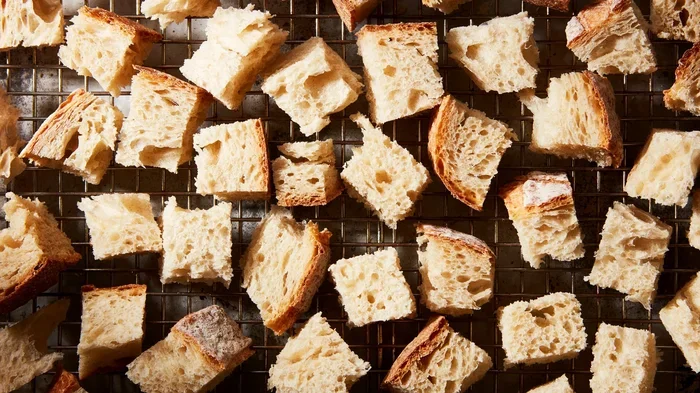
Timing is a guide, not a rule. The best way to know your bread cubes are ready is to test them. Here is what properly dried cubes should look and feel like:
- Color: Light golden on the edges, not brown or toasted.
- Texture: Dry to the touch on the outside with a slight crunch on the edges.
- Sound: When you tap two cubes together, they should make a light, hollow sound.
- Flexibility: They should still bend slightly without snapping in half.
- No moisture: If you break a cube open, the inside should feel dry and crumbly, not soft or doughy.
If your cubes pass all of these tests, they are ready. If not, give them another couple of minutes and check again.
Best Types of Bread for Oven-Dried Stuffing
Not all breads are created equal when it comes to stuffing. Some breads dry beautifully and absorb broth like a sponge. Others turn to mush or fall apart. Choosing the right bread makes a huge difference in your final result.
Top Bread Choices for Stuffing
White sandwich bread is the classic choice for a reason. It is soft, light, and dries evenly in the oven. It produces a fluffy, tender stuffing that most people love. It is also very forgiving if you accidentally leave the cubes in a little too long.
Sourdough adds a wonderful tangy flavor to stuffing. It dries a bit slower than white bread due to its dense crumb, so plan for the extra few minutes. The result is a stuffing with more character and depth of flavor.
Challah is a rich, eggy bread that makes incredibly luxurious stuffing. It dries well and absorbs broth beautifully. The slightly sweet flavor pairs wonderfully with savory stuffing ingredients.
Cornbread is a Southern favorite for stuffing, especially alongside roast turkey. You can dry cornbread cubes in the oven the same way as regular bread. They hold their shape well and add a sweet, slightly crumbly texture.
Italian bread and ciabatta have a rustic, chewy texture that works beautifully in stuffing. These breads dry a bit slower because of their dense crumb, but they add a wonderful hearty quality to your dish.
French bread and baguette make excellent stuffing too. Just be careful when cutting cubes because they can be crusty. Remove the thickest crusts before cubing for more even drying.
Breads to Avoid for Stuffing
Some breads do not work well for stuffing, no matter how carefully you dry them. Bread with heavy mix-ins like nuts, seeds, or dried fruit can burn in the oven and throw off the flavor of your stuffing. Very thin breads like crackers or flatbreads will turn to dust before they dry properly. And pre-sliced bread with lots of preservatives sometimes dries unevenly and can have a waxy texture.
Step-by-Step Guide to Drying Bread Cubes in the Oven
Now that you know the timing and the best bread choices, let us walk through the actual process step by step. This is the exact method I use every time I make homemade stuffing.
Step 1: Cube Your Bread
Start by cutting your bread into cubes that are about ¾ inch in size. This is the ideal size for even drying and good absorption. Use a serrated knife for clean cuts, especially if your bread is dense.
Try to make your cubes as uniform as possible. When cubes are different sizes, smaller pieces will over-dry while larger pieces stay moist. Consistency is key.
Step 2: Spread Cubes on a Baking Sheet
Line a large baking sheet with parchment paper or a silicone baking mat. Spread the bread cubes in a single layer across the entire surface. Do not pile them up or stack them. You want air to circulate around every cube.
If you have a lot of bread and not enough sheet space, use two baking sheets. Overcrowding is the number one reason bread cubes dry unevenly.
Step 3: Place in the Oven
Preheat your oven to 300°F. Once it is up to temperature, place the baking sheet on the middle rack. The middle rack ensures the most even heat distribution.
Set a timer for 10 minutes. Do not walk away and forget about it. You need to check the cubes periodically to make sure they do not over-dry or burn.
Step 4: Stir and Flip the Cubes
After 10 minutes, open the oven and use a spatula to stir and flip the cubes. This exposes the bottom sides to the heat and ensures all sides dry evenly.
Spread the cubes back out in a single layer and return them to the oven for another 3 to 5 minutes. For most breads, this brings the total drying time to 13 to 15 minutes.
Step 5: Check and Cool
Remove the baking sheet from the oven and let the cubes cool completely on the sheet. Cooling takes about 10 to 15 minutes. Do not skip this step. If you add warm, slightly moist cubes to your stuffing, they will release moisture and make your stuffing soggy.
Once the cubes are completely cool, store them in an airtight container until you are ready to make your stuffing. They can sit at room temperature for up to two days or be frozen for longer storage.
Common Mistakes When Drying Bread for Stuffing
Even experienced cooks make mistakes when drying bread for stuffing. Here are the most common ones and how to avoid them.
Using the Wrong Oven Temperature
The biggest mistake is using too high a temperature. Some people set the oven to 350°F or higher thinking it will dry the bread faster. But high heat toasts the outside of the cubes while leaving the inside moist. You end up with crispy shells and gummy centers. Stick with 300°F for gentle, even drying.
Overcrowding the Baking Sheet
When you pile cubes on top of each other, the ones on the bottom do not get any airflow. They stay soft and moist while the top cubes might burn. Always spread cubes in a single layer and use multiple sheets if needed.
Forgetting to Stir
Bread cubes on the bottom of the sheet dry faster than cubes on top. If you do not stir them halfway through, you will end up with unevenly dried cubes. Some will be perfect, and others will still be damp.
Using Fresh Bread Without Adjusting Time
Fresh bread has significantly more moisture than day-old bread. If you use fresh bread and follow the same drying time, your cubes will likely come out under-dried. Either use day-old bread or add 3 to 5 extra minutes to your drying time.
Over-Drying the Cubes
It is possible to dry your bread cubes too much. When cubes turn completely golden brown and become brittle, they will crumble apart when you mix them with broth. You want cubes that are dry but still slightly pliable. Think of them as having the texture of a dry cracker, not a toast chip.
Expert Tips for Perfect Stuffing Every Time
Once your bread cubes are perfectly dried, you are ready to make your stuffing. But a few extra tips can take your stuffing from good to absolutely outstanding.
Toast your bread cubes before drying them. If you want a nuttier, more flavorful stuffing, try lightly toasting your cubes at 350°F for 5 minutes before reducing the heat to 300°F for the main drying phase. This adds a subtle depth of flavor that pairs beautifully with herbs and broth.
Season your drying cubes lightly. While the cubes are on the baking sheet, toss them with a small amount of melted butter and a pinch of salt before drying. This adds flavor and helps the cubes brown slightly for extra texture.
Use broth at room temperature. When you combine your dried cubes with broth, make sure the broth is warm, not hot, and at room temperature if possible. Cold broth slows down absorption and can leave your stuffing unevenly moist.
Let the assembled stuffing rest before baking. Once you mix your dried cubes with your stuffing ingredients, let the mixture sit for 15 to 20 minutes before baking. This gives the cubes time to absorb the broth fully, resulting in a more cohesive and flavorful stuffing.
Save your bread heels and ends. Do not throw away the ends of your bread loaf or the heels. These pieces dry just as well as the rest and are perfect for stuffing. Just trim off any thick crusts before cubing.
Make extra dried cubes. Dried bread cubes keep well in an airtight container for up to a week. Making a big batch ahead of time saves you time on cooking day and ensures you always have the perfect base for stuffing ready to go.
Frequently Asked Questions
Can I use fresh bread instead of day-old bread for stuffing?
Yes, you absolutely can. Fresh bread works fine, but you will need to add a few extra minutes to your drying time. Fresh bread contains more moisture, so it takes longer for the oven to pull that moisture out. Plan for 15 to 20 minutes at 300°F instead of the standard 10 to 15 minutes, and check the cubes frequently to make sure they do not over-dry.
Can I dry bread cubes at a higher temperature to save time?
You can, but it is not recommended. Higher temperatures like 350°F or 375°F will toast the outside of the cubes too quickly while leaving the inside moist and gummy. The low and slow approach at 300°F ensures even drying from the outside in. Patience here pays off with perfectly dried cubes every time.
How do I store dried bread cubes for stuffing?
Let your dried cubes cool completely, then store them in an airtight container or a zip-lock bag at room temperature. They will keep for up to two days. You can also freeze them for up to three months. When you are ready to use them, spread them on a baking sheet and let them come to room temperature before mixing them with your stuffing ingredients.
What is the difference between stuffing and dressing?
The terms are often used interchangeably, but there is a simple distinction. Stuffing refers to the mixture cooked inside the bird, while dressing refers to the same mixture cooked separately in a baking dish outside the bird. The preparation method for the bread cubes is exactly the same regardless of which term you use. Both benefit from oven-dried bread cubes for the best texture.
Can I use a toaster oven to dry bread cubes for stuffing?
Yes, a toaster oven works well for drying bread cubes. The process is the same — 300°F for 10 to 15 minutes — but you may need to stir the cubes more frequently because toaster ovens can have hot spots. Use a lower rack position and keep a close eye on the cubes to prevent any from burning.
Why is my stuffing soggy even after drying the bread?
If your stuffing turns out soggy despite properly dried bread cubes, the issue is likely with the ratio of broth to bread. Too much broth is the most common cause. Start by adding broth gradually and mixing as you go. You can always add more, but you cannot take it away. Also make sure your cubes are completely cool before adding broth, as warm cubes release steam and create excess moisture.
Conclusion
How long to dry bread in oven for stuffing comes down to a simple formula: 300°F for 10 to 15 minutes. But as we have covered, the exact time depends on your bread type, cube size, and personal preference. The key is to watch your cubes closely, stir them halfway through, and test for dryness before pulling them out.
Once you master this simple technique, your stuffing will never be the same. You will notice a dramatic improvement in texture, flavor absorption, and overall quality. Oven-dried bread cubes are the foundation of great stuffing, and once you start using them, you will never go back to skipping the drying step.
So next time you are preparing for a holiday meal or just craving a comforting side dish, take those 15 minutes to dry your bread properly. Your stuffing will thank you. Happy cooking!